


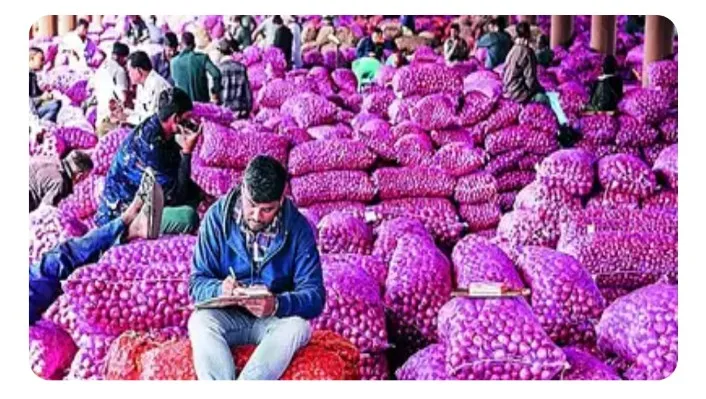
New Delhi: The intervention of the government in procuring kharif onion and simultaneously disposing of them has led to a notable decrease in average retail prices by 30% and wholesale prices by 35% over the past month. Observing the declining trend and considering the short shelf life of the summer crop, officials suggest a calibrated approach to lifting the export ban.
The ban on onion exports and strategic market interventions have yielded positive results, with average retail prices dropping to Rs 39 per kg this week compared to Rs 59 a month ago. Simultaneously, average wholesale prices have fallen from Rs 4,885 per quintal to Rs 3,137 during the same period.
Sources indicate that the government might allow export through government cooperatives, as communicated to onion trade representatives. There is a call for an open policy on onion exports without a quota system, similar to other commodities.
Central agencies have procured approximately 25,000 tonnes of kharif onion from farmers, and these have been simultaneously disposed of due to storage limitations. Officials suggest that calibrated exports could capitalize on the increased availability of fresh kharif onions.
Traders foresee the opportunity to export to countries like Bangladesh, Malaysia, and Nepal. Calibrated exports are seen as a measure to prevent further price decline, ensuring fair remuneration for farmers and maintaining stability in the market.
While considering export options, officials affirm that the government will continue its intervention to regulate prices. Nafed and NCCF are authorized to procure 7 lakh tonnes during this fiscal year, with 5.3 lakh tonnes of onion already procured.
As the onion market dynamics evolve, a careful approach to exports aims to strike a balance between market stability and the economic interests of farmers.