


Al-Qaida and the Islamic State (IS), two extremist entities, have issued directives to their adherents, urging them to target Israeli, American, and Jewish entities. These directives amplify the potential for renewed terrorist activities, either in the Middle East or the Western world.
In a sequence of proclamations spanning the last fortnight, affiliates of Al-Qaida extended their congratulatory remarks to Hamas for what they termed its “incursion into Israel,” a reference to the tragic acts of terror that took the lives of 1,400 individuals, predominantly innocent civilians, on the 7th of October.
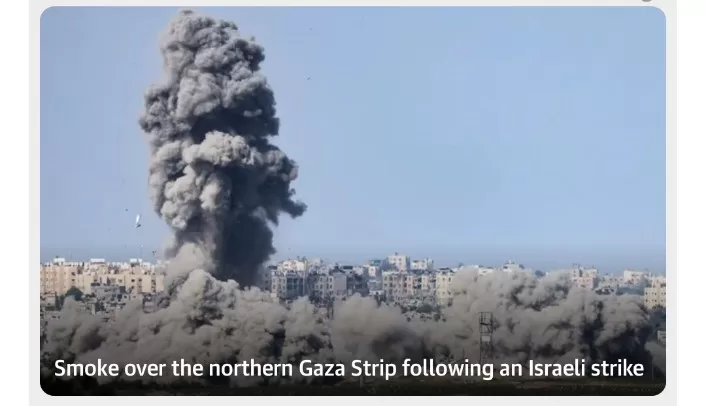
The Israeli military’s offensive in Gaza, which has led to a humanitarian catastrophe and over 4,500 casualties, according to medical authorities within the Hamas-administered territory, has ignited a firestorm of indignation across the Islamic landscape.
Experts opine that this situation has provided extremist groups with a strategic opportunity.
In a recent declaration by al-Shabaab, Al-Qaida’s potent Somali branch, the conflict in the Middle East was characterized as not just “the struggle of Islamic factions within Palestine,” but rather a battle that encompasses the entire Muslim Ummah.
The statement underscored the imperative for Muslims to unite and offer unwavering support to the mujahideen in their resistance against the Jews and their alleged hypocritical infidel allies. It emphasized the centrality of the strength of the Muslim community in the power of its jihadist fronts.
Similarly, Al-Qaida affiliates in the Indian subcontinent, Yemen, and Syria have released comparable statements, concurring with the actions of Hamas against Israel and calling for further hostilities directed at Jewish targets.
According to reports from the Long War Journal, a specialized news outlet covering Islamist violence, Al-Qaida’s branches in North and West Africa have lauded the Hamas attacks on Israel and have beseeched further aggression against the Jewish population. In a statement, these groups congratulated these actions and urged the continuance of these efforts, emphasizing the desire to relieve the Jewish population from what they described as the “sword of humiliation.”
These calls for violence are heightening the concerns of Western officials regarding a potential resurgence of extremist aggression. Prominent figures like the heads of MI5 and the FBI have warned that Jewish communities and other groups could face threats from lone actors, Iran, or militant factions.
Even before the Gaza conflict, European authorities had been alerting about a rising tide of Islamist terrorism within the continent. Ken McCallum, the Director General of Britain’s domestic intelligence agency, MI5, has voiced apprehensions about “self-initiated” individuals who may have been radicalized online and could respond in “spontaneous or unpredictable” manners in the UK in the aftermath of the terrorist actions in Israel and the possibility of an extended conflict.
In May, Dutch security services raised concerns about the increased terrorist threat from IS to Europe. In the same month, the French Interior Minister noted a resurgence of the risk of Islamist terrorism, not only affecting France but also its neighboring nations.
Earlier this month, an assailant, who had pledged allegiance to IS, fatally stabbed a teacher in France, while two Swedish football enthusiasts were shot in Brussels by a 45-year-old individual known to security agencies and suspected of having radical inclinations.
Caleb Weiss, a senior analyst at the Bridgeway Foundation, pointed out, “Currently, it’s more probable to witness isolated individuals responding to these calls, but as the conflict persists, there’s the potential for more coordinated plots to emerge. All these groups are striving to exploit the ongoing conflict to garner support, both on a local and international scale.”
It’s worth noting that while Al-Qaida has previously criticized organizations like Hamas and Hezbollah, and has no substantial presence in Gaza or the West Bank, there exist noteworthy ideological distinctions between them. Al-Qaida has expressed disapproval of the involvement of both groups in governance and administration.
In contrast, the Islamic State (IS) offered directives on “practical steps to combat the Jews” but censured Hamas for its associations with Iran and its narrow concentration on Israel. IS has called for attacks against Jewish targets globally, with specific emphasis on North America and Europe.
A fierce rivalry between IS and Al-Qaida has resulted in competing rhetoric as they vie for recruits. Both organizations have witnessed considerable weakening in recent years. IS lost its self-proclaimed caliphate in Syria and Iraq, while Al-Qaida’s longstanding leader, Ayman al-Zawahiri, succumbed to a drone strike in the past year.