


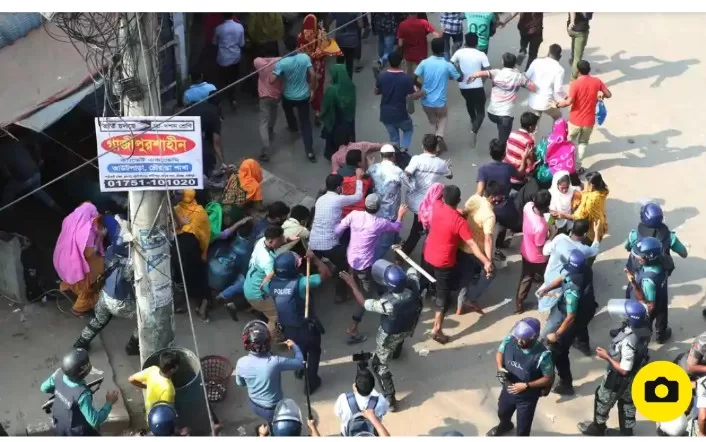
In a distressing turn of events, a Bangladeshi woman, Anjuara Khatun, aged 26 and employed as a machine operator at Islam Garments in Gazipur, lost her life during a protest staged by garment workers advocating for a salary increase. The unfortunate incident unfolded as Khatun was heading home following the abrupt closure of the factory amid a gathering of around 400 demonstrators.
Reports indicate that Khatun’s husband, upon hearing gunshots fired by the police to disperse the protesters, discovered his wife’s lifeless body. Tragically, she had sustained a fatal gunshot wound to the head and succumbed to her injuries while being transported to Dhaka Medical College Hospital. This marks the third casualty among garment workers in the past fortnight, with numerous others sustaining severe injuries during clashes in prominent production hubs like Ashulia, Gazipur, and Savar.
The escalating violence erupted in response to the government’s recent announcement of a monthly wage increase to 12,500 taka (£92), a decision contested by workers and human rights organizations who deemed it inadequate—merely half of the amount workers had been petitioning for. Rasel Hawlader, 26, an electrician at Design Express Ltd, and Imran Hossain, 32, who perished in a fire at ABM Fashions, are the other unfortunate casualties in this series of protests.
As news of the revised minimum wage spread, protests intensified around the capital, with thousands of workers blocking main roads. Law enforcement responded with tear gas and rubber bullets, exacerbating the turmoil. Instances of arson, vandalism, and the deployment of border guards further complicated the situation.
Trade unionist Nazma Akhter implored the prime minister to intervene and halt the ongoing police brutality, emphasizing the unacceptability of the proposed wage. Akhter urged the government to ensure a revised wage that justly compensates workers, asserting that global fashion brands must also take a stance against the violence inflicted upon the women manufacturing their products.
In the wake of these tragic events, the global community is called upon to reflect on the human cost of garment production and the urgent need for fair compensation and humane working conditions in the industry.