


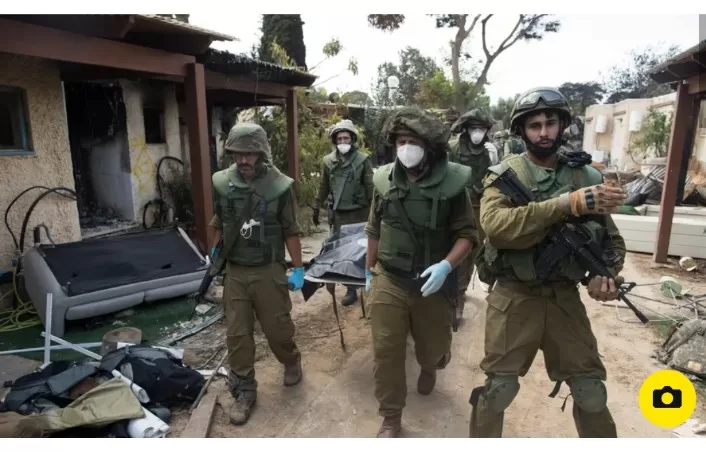
In a harrowing scene at Kfar Aza, one of the initial Israeli settlements infiltrated by Hamas militants during the recent wave of hostilities, unspeakable acts of violence transpired. As the Israeli army raced to reach the kibbutz, comprised of 750 inhabitants in southern Israel, an unrelenting battle ensued for three long days. During this period, Hamas gunmen ruthlessly executed and mutilated numerous civilian residents.
General Itai Veruv, a prominent figure within the Israel Defence Forces, described the heart-wrenching scene to the BBC, stating, “Mothers, fathers, babies, young families—killed in their beds, in the protection room, in the dining room, in their garden. It’s not a war, it’s not a battlefield. It’s a massacre.”
Despite the presence of a security team and fortified safe rooms within the community’s homes, neither the kibbutz nor the upper echelons of the Israeli government and military were adequately prepared for the ferocity of the assailants emerging from breached Gaza.
Rampaging attackers, armed with assault rifles, rocket-propelled grenades, and hand grenades, claimed the lives of dozens of innocent residents and carried out gruesome acts of mutilation, according to Veruv and other soldiers, who bore witness to these horrifying atrocities.
Davidi Ben Zion, the deputy commander of Unit 71, the paratroopers leading the Israeli forces into Kfar Aza, expressed gratitude for saving the lives of numerous parents and children, though he mourned those who suffered burns from Molotov cocktails, emphasizing the aggressiveness of the assailants, likening them to animals.
The rapid onslaught was so overwhelming that the remnants of a Saturday breakfast, featuring milk and coffee, still lay untouched on a table within one home, while the kitchen floor was stained with the horrors of the day.
Outside, once-tidy streets, adorned with palm trees and banana plants, were cloaked in the stench of death and marred by the ravages of war. Bodies lay where they had fallen in gardens, necessitating hours for mortuary teams to recover them. Homes bore the scars of violent confrontations, some reduced to rubble, with torched vehicles and piles of shattered furniture strewn about.
Israeli soldiers meticulously combed through the village, cautioning visiting journalists against entering homes that hadn’t been cleared, as they could potentially be rigged with explosives.
Amidst the devastation, remnants of a paraglider used to breach Israeli defenses and motorcycles employed to transport militants out of Gaza were discovered, offering a glimpse into the tactics employed during this ruthless incursion.
In a somber address, U.S. President Joe Biden evoked the chilling specter of Hamas’s attack, which has claimed the lives of at least 1,000 individuals, drawing parallels to the most heinous rampages of the ISIS terror group.
The retaliatory Israeli airstrikes, designed to enforce a blockade that isolated the besieged Gaza Strip, have resulted in the tragic loss of over 900 lives in the territory, which is home to 2.3 million people deprived of basic necessities such as food and fuel.