


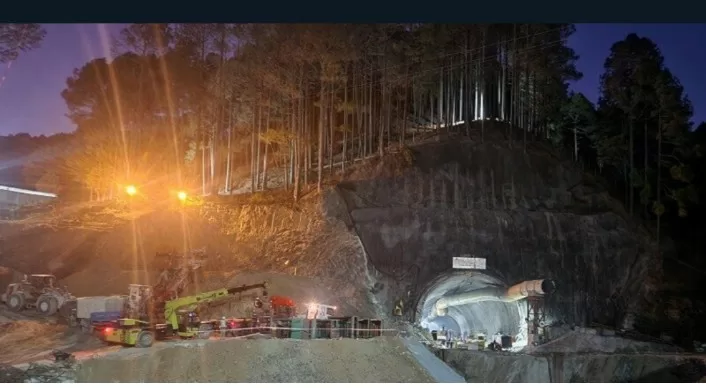
In a significant rescue operation, Indian authorities are striving to liberate 41 men who have been trapped in a road tunnel in Uttarakhand for nine days. Ongoing since November 12, excavators have been tirelessly working to clear debris from the tunnel, hampered by falling rubble and breakdowns of heavy drilling machines, necessitating two airlifts of additional equipment by the air force.
Initial attempts to create a passage for the trapped men by horizontally driving a steel pipe were halted due to a “panic situation” caused by a cracking sound on Friday. Consequently, rescue teams are now gearing up to dig an entirely new shaft from above, requiring the construction of a fresh track to transport heavy equipment to the forested hilltop.
Concerns have been raised by experts about extensive construction in Uttarakhand, a region prone to landslides. Uttarakhand Chief Minister Pushkar Singh Dhami assured the public that every possible effort is being made to ensure the safety of the workers trapped in the tunnel. He communicated the urgency of the situation to Prime Minister Narendra Modi.
Top local civil servant Abhishek Ruhela stated that the road to the new drilling site is three-quarters complete, with 900 meters of the 1,200-meter-long road built for drilling over the tunnel. Communication with the trapped workers is maintained through radio, while essential supplies, including food, water, oxygen, and medicine, are delivered through a narrow pipe.
Foreign experts, including disaster investigator Arnold Dix, have been enlisted to contribute to the rescue efforts. Dix expressed confidence in finding a solution and emphasized the importance of ensuring the safety of both the rescued and the rescuers.
At the tunnel’s entrance, villagers established a Hindu temple dedicated to the local god Boukhnag, claiming the original temple was moved during construction. Some villagers attribute the tunnel collapse to the destruction of the initial temple. The tunnel is part of Prime Minister Modi’s infrastructure initiative to enhance connectivity between popular Hindu sites and improve access to strategically significant areas bordering China.
By AFP