


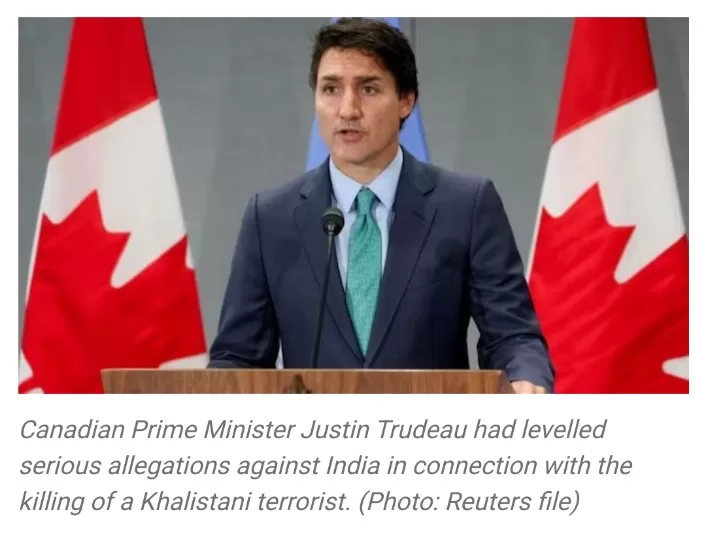
Ottawa, In a year-end interview with The Canadian Press, Canadian Prime Minister Justin Trudeau shed light on his decision to publicly make allegations against India regarding the killing of Khalistani separatist Hardeep Singh Nijjar. Trudeau stated that the public announcement was intended to provide an “extra level of deterrence” and to prevent a similar action in the future.
The tensions between India and Canada escalated after Trudeau’s allegations on September 18, where he hinted at a potential involvement of Indian agents in Nijjar’s killing. India promptly rejected the claims, labeling them as “absurd” and “motivated.”
Trudeau explained that his decision to go public came after weeks of “quiet diplomacy,” during which the allegations were raised with India at the highest levels. He emphasized that the message delivered in the House of Commons aimed at putting a “chill” on any potential repeat incidents.
The Canadian Prime Minister stated, “Too many Canadians were worried that they were vulnerable.” Trudeau revealed that the public statement was made after considering the importance of India demonstrating leadership during the G20 summit.
“We felt that all the quiet diplomacy and all the measures that we put in… needed a further level of deterrence, perhaps of saying publicly and loudly that we know, or we have credible reasons to believe, that the Indian government was behind this,” Trudeau said.
Trudeau acknowledged that Canada intends to reveal evidence as the investigation progresses, similar to how the U.S. handled its case. He added that Canada’s investigation involves different stakes and processes, given that it is focused on a murder.
In the aftermath of Trudeau’s allegations, India temporarily suspended visa issuance to Canadian citizens and requested Ottawa to downsize its diplomatic presence. While some visa services have resumed, the strained relations between the two nations persist.