


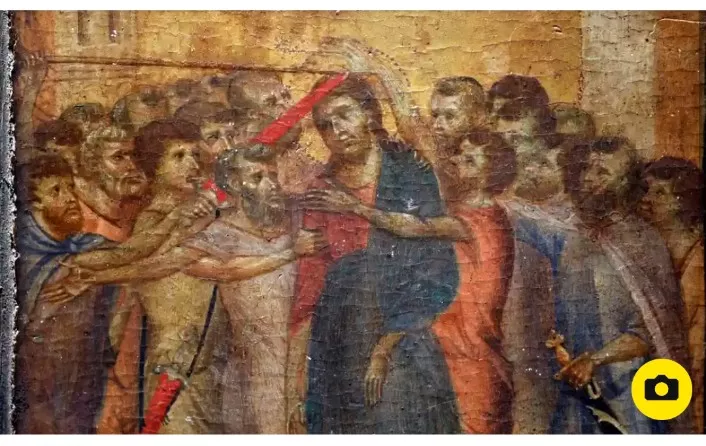
A 13th-century masterpiece, “Christ Mocked” by the Florentine artist Cimabue, has found a prestigious home at the Louvre after a dramatic journey from a kitchen stove to an auction block. Originally destined for disposal during a house clearance, the artwork was brought to attention when an expert, assessing the property’s contents, identified its potential value of up to €400,000. Subsequently verified as an authentic Cimabue, the painting was later sold at auction for an impressive €24 million.
The Louvre’s acquisition of “Christ Mocked” was made possible after the French culture ministry declared the artwork a “national treasure” in 2019, imposing a temporary export ban. The Louvre was granted a 30-month window to raise the necessary funds, embarking on a four-year effort to secure the historic piece. The painting, now one of the oldest in the Louvre’s collection, is slated to take center stage in a 2025 exhibition.
Cimabue, a pre-Renaissance artist born in Florence, painted “Christ Mocked” around 1280. It is presumed to be one of eight panels from a large diptych, with five panels still missing. Measuring just over 25cm by 20cm, the artwork depicts the mocking of Jesus before his crucifixion and is painted on a poplar wood panel with a gold-leaf background.
Despite facing stiff competition at the auction, the Louvre lost to a record bid of €19.5 million, totaling €24 million with fees. The subsequent export ban provided a lifeline, allowing the Louvre to mobilize funds through an “exceptional mobilisation,” encouraging donations from patrons who were offered tax exemptions. The acquisition enriches the Louvre’s collection of Cimabue works, complementing the larger painting, “Maestà,” already on display.
The Louvre plans to exhibit both Cimabue masterpieces in the first half of 2025, marking a significant moment in the history of art. While details of the acquisition cost remain undisclosed, the successful effort to preserve this historic artwork reflects the commitment of cultural institutions and patrons to safeguarding invaluable treasures.