


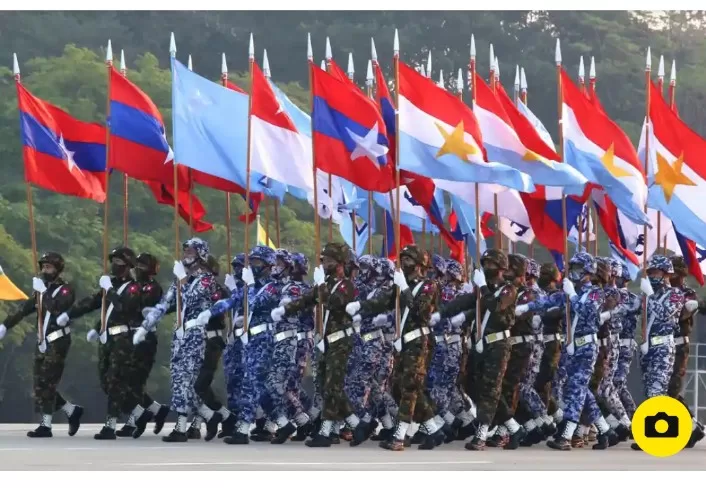
In a comprehensive investigation conducted by the Security Force Monitor (SFM), an initiative led by Columbia Law School’s Human Rights Institute, damning revelations have emerged regarding Myanmar’s military commanders. The report, released on Thursday, asserts that a significant majority of senior military figures, many of whom wield influential political roles within the nation, are implicated in egregious crimes such as rape, torture, killings, and forced disappearances. This disturbing pattern is documented to have occurred between the years 2011 and 2023.
The SFM’s research indicates that a staggering 64%, equivalent to 51 out of 79, of Myanmar’s high-ranking military commanders bear responsibility for these war crimes. Gen Mya Tun Oo, the deputy prime minister, former defense minister, and a current member of the ruling military council, is identified as the most severe perpetrator of human rights violations.
Tony Wilson, lead researcher and SFM director, emphasized the significance of this research in filling a critical gap in the understanding of accountability. He stated, “This is one of the pieces of the jigsaw that has up until now been missing in terms of accountability – demonstrating how the system works and that these alleged abuses are not just the result of rogue units or individual soldiers.”
The report aims to shed light on the opaque nature of Myanmar’s military and contribute to global efforts to hold those responsible for war crimes accountable. The military’s actions have long been under scrutiny, especially since the violent crackdown in Rakhine state six years ago, which led to the displacement of over 750,000 Rohingya Muslims and was labeled a “textbook example of ethnic cleansing” by the UN.
The pervasive sexual violence perpetrated by Myanmar’s military has been a recurring theme, documented extensively by human rights organizations. Despite widespread recognition of these atrocities, the path to justice has remained elusive. The SFM’s report serves as a significant step in exposing the culpability of high-ranking military officials, fostering transparency, and contributing to the ongoing efforts for international accountability.
While international bodies, such as the International Criminal Court (ICC), have initiated investigations into alleged crimes against humanity in Myanmar, progress has been slow. The victims, such as Fatima Khatun, a survivor of the Rakhine state violence, express frustration at the lack of justice, emphasizing the enduring impact of the atrocities.
The SFM’s track record in supporting global investigations underscores its commitment to exposing human rights violations and holding powerful entities accountable. In the context of Myanmar, the report adds weight to the calls for justice and accountability for the heinous crimes committed by military commanders against civilians and protesters.
The Myanmar authorities have yet to respond to requests for comments, and the military junta has consistently denied allegations of atrocities, framing its actions as necessary for stability and counterterrorism efforts.