


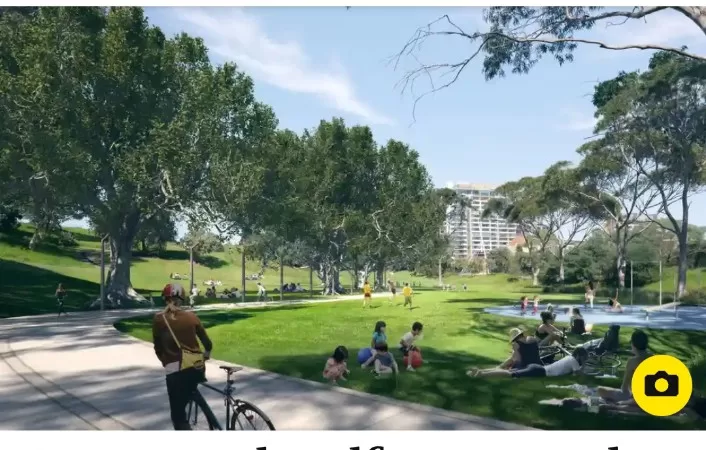
In an announcement that signifies a significant shift in land use, New South Wales Premier Chris Minns disclosed plans to split the 45-hectare Moore Park golf course in central Sydney, with the intent to transform a substantial portion into a public park by 2026. Approximately 20 hectares of this revered golf course will be repurposed into verdant parkland, offering opportunities for grassroots sports and recreational activities.
The golf course, which has been privately operated through service agreements with the NSW government, faces a turning point as the current agreement approaches its expiration in mid-2026. This decision follows a prolonged debate, with prominent figures like Sydney Lord Mayor Clover Moore and former NSW Premier Bob Carr advocating for the release of prime urban land within the city center for broader public use.
As part of an inclusive consultation process set to commence early next year, a discussion paper outlining the golf course’s future is anticipated. The government’s preferred course of action is to establish the new park on the western boundary and a section north of Dacey Avenue. This strategic placement aims to optimize accessibility for residents residing in the Green Square, Zetland, and Waterloo areas.
Of paramount significance is the demographic transformation occurring in the Green Square urban renewal zone, which is slated to accommodate a burgeoning population. By 2040, an estimated 80,000 residents will dwell within a 2km radius of Moore Park. With Sydney’s urban landscape evolving over the past century, the repurposing of the golf course aligns with the imperative to address the housing crisis and provide essential public infrastructure, including recreational spaces.
Minns emphasized, “When the golf course was first established, the surrounding areas were largely industrial lands. As we work to tackle the housing crisis facing NSW by building up, we know that delivering public infrastructure including parks is more important than ever before.”
Paul Scully, the Minister for Planning and Public Spaces, stressed the necessity to bolster housing density with increased parkland. He remarked, “This land is part of Sydney’s backyard. We can repurpose this area as public open space while retaining a golf course and driving range.”
The move to allocate a portion of the Moore Park golf course for public use is seen as a response to the clamor for more green spaces from communities in Redfern, Waterloo, Green Square, and Zetland. It represents a proactive step toward addressing the growing need for open spaces in the midst of urban expansion.
At the heart of this transformation, the Moore Park golf club finds itself at the center of the debate. Club President John Janik expressed his concerns about the decision, highlighting the course’s historical appeal to the working class, emphasizing its relatively affordable membership fees compared to other private golf courses in the area.
The decision to reconfigure the Moore Park golf course into a public park underscores the evolving urban landscape of Sydney, prioritizing the well-being and recreational needs of a growing population. This initiative, set to take effect in 2026, signifies a major development in the city’s urban planning and allocation of public spaces.