

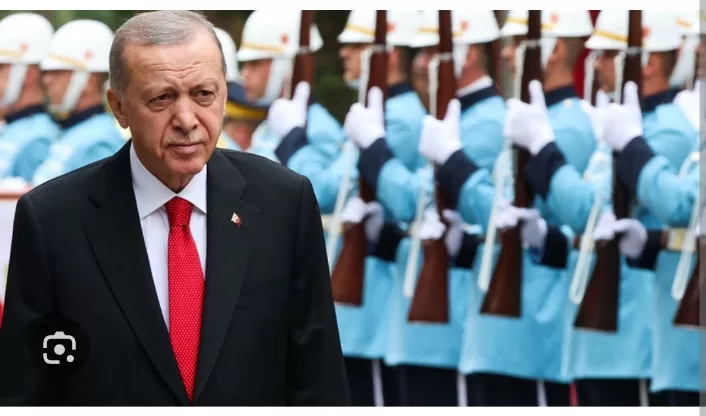
A century ago, the visionary Mustafa Kemal Ataturk laid the foundation of the Turkish Republic on the bedrock of secular values. However, as the centennial anniversary of this historic event approached, many began to question the preservation of Ataturk’s legacy in the face of a conservative leadership under President Recep Tayyip Erdogan.
For weeks, the secular segment of Turkey’s population pondered whether President Erdogan’s Islamic government would officially commemorate the 100th anniversary of the republic’s founding on October 29. As the days passed, there was no sign of an official program, leaving foreign diplomats speculating about invitations.
Then, on October 20, Erdogan’s communications department announced a series of events to mark the occasion, with a strong emphasis on the Erdogan era. This announcement confirmed the apprehensions of secularists who believed that Erdogan was attempting to diminish the legacy of Turkey’s founding father, Mustafa Kemal Ataturk, and instead cultivate a cult of personality around Erdogan as the leader of an Islamic nation.
Erdogan has been promoting the idea of the “Turkish Century,” a campaign slogan he used during his successful reelection in May with the Justice and Development Party (AKP). After more than two decades in power, Erdogan now seeks to secure his place in history as the leader who steered the republic into its second century.
Beate Apelt, the head of the Turkish office of the Friedrich Naumann Foundation for Freedom, noted the symbolism in the preparations leading up to the anniversary. The term “Turkish century” and the display of large portraits of Ataturk and Erdogan side by side suggest that while Ataturk may have initiated the republic, Erdogan is portrayed as the key figure in a grand century-long project.
There is growing unease among many Turks that the centennial celebration, which should be marked with grandeur, has taken on religious undertones. This contradicts Ataturk’s secular principles, as he firmly separated religion from the state. Ataturk’s reforms included the abolition of religious brotherhoods and the caliphate, which still engender resentment among Islamists today.
Erdogan, on the other hand, has supported religious groups throughout his tenure, granting them privileges. He rarely refers to Ataturk by his full name, instead using the term “veteran Mustafa Kemal.” This is seen as a deliberate move to distance himself from the term “Ataturk,” which means “forefather of the Turks,” a concept Erdogan is perceived to reject.
Ataturk’s vision for Turkey was to create a modern, secular, and Westernized nation. He implemented a series of transformative reforms, including the adoption of the Latin alphabet, Western legal codes, and women’s suffrage. He also encouraged the adoption of Western attire in place of traditional Ottoman clothing.
Ataturk’s long-term goal was to create a unified Turkish nation from the remnants of the diverse Ottoman Empire. While progress has been made, ongoing disputes persist among various minority groups, such as Armenians, Alevis, and Kurds. The conflict with the Kurdistan Workers’ Party (PKK) has resulted in significant casualties, with nearly 40,000 people losing their lives since 1984.
Despite the challenges, Ataturk’s reforms are now closely associated with his legacy. Salim Cevik, a Turkey expert at the German Institute for International and Security Affairs in Berlin, noted that at the time, these reforms were secondary to Ataturk’s primary objective: to save the remaining state from complete collapse and establish a strong republic that could withstand internal and external threats.
Over the past century, Turkey has evolved into a robust regional power, and its position in international alliances, such as NATO, has solidified its place in the global political system. Turkey’s strategic location between Europe and the Middle East, control over key waterways, and its role as a bridge between various regional conflicts make it a crucial player on the world stage.
Erdogan has leveraged Turkey’s strategic importance, positioning himself as a mediator in regional disputes, such as the conflicts between Ukraine and Russia or Israel and Hamas. He has the potential to play a constructive role in resolving these conflicts, as he did with the grain agreement for Ukraine.
Despite these contributions, Erdogan’s leadership has been marked by increased militarization and a more confrontational foreign policy stance. Turkey’s soft power has waned, and Erdogan has turned to military strength as a means of asserting influence. Airstrikes in neighboring regions, support for militant groups, and the deployment of mercenaries have drawn criticism from Western countries.
In summary, the 100th anniversary of the Turkish Republic’s founding has raised concerns among secularists that Erdogan is downplaying Ataturk’s legacy in favor of promoting his own role in Turkish history. Erdogan’s leadership has shifted the country’s direction, emphasizing religious elements and increasing militarization, which contrasts with Ataturk’s vision of a secular, Westernized, and modern Turkey. Despite these differences, Turkey’s strategic importance on the global stage remains undeniable.