

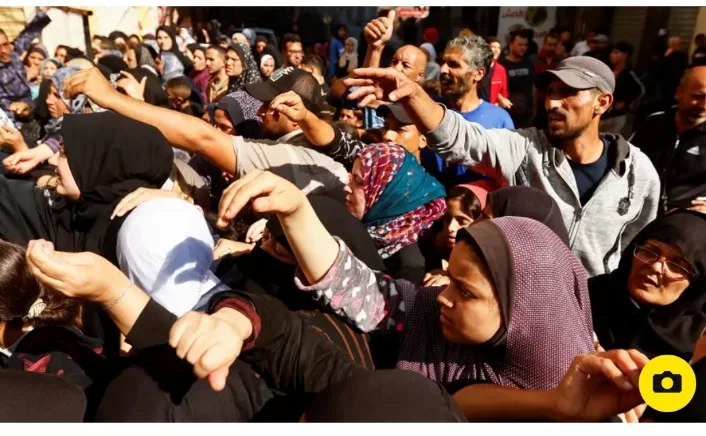
NEW YORK- The United Nations has issued a dire warning regarding the Gaza Strip, stating that its civilian population is on the brink of immediate starvation. This unsettling revelation comes as fears intensify about Israeli military expansions in the southern regions, where a significant number of people sought refuge from the ongoing conflict.
Fuel shortages, a crippling blow on Friday, not only disrupted aid shipments but also plunged the entire strip into communication blackout. The UN’s logistical efforts were paralyzed as trucks remained immobilized, exacerbating an already critical situation. Water treatment and sewage systems have effectively shut down, heightening concerns about the potential outbreak of infectious diseases.
The Israeli military, asserting control in the north, continues its pursuit of a Hamas command and control center purportedly located under al-Shifa hospital. While claims of Hamas utilizing the hospital as a shield have been vehemently contested, the military maintains its position, citing intelligence and releasing satellite maps and computer animations to support their assertions.
Despite these developments, a doctor at al-Shifa hospital revealed that Israeli forces had uncovered nothing within the facility. The deliveries of food and water, publicized by the Israeli military, were deemed “very minimal” and insufficient to meet the needs of the medics, patients, and refugees within the complex.
The death toll from Israel’s military operations in Gaza has surpassed 12,000, with 5,000 of the casualties being children. An additional 3,750 people are reported missing, believed to be buried under the rubble.
Of particular concern is the plight of those crowded in the south of the Gaza Strip, with indications that Israel’s military operations might expand beyond the current focus on the northern areas. Civilians have been instructed through leaflets to move into a smaller “safe zone” in the coastal town of Mawasi. However, this unilateral declaration of a “safe zone” has prompted warnings from 18 UN agencies and international aid groups, citing the increased risk of attacks.
The UN Office for the Coordination of Humanitarian Affairs reported that over 800,000 internally displaced people are seeking refuge in at least 154 shelters run by UNRWA, the UN Palestinian refugee agency. Unfortunately, the UN is unable to provide adequate food, water, or medical care, and the situation is further exacerbated by woefully inadequate deliveries.
Cindy McCain, the executive director of the UN World Food Programme, expressed deep concern, stating, “Supplies of food and water are practically nonexistent in Gaza, and only a fraction of what is needed is arriving through the borders. Civilians are facing the immediate possibility of starvation.”
Amidst these challenges, the World Health Organization warns of an increased risk of disease during the approaching winter season, with sewage treatment and water pumping plants shutting down due to fuel shortages.
As the crisis deepens, calls for humanitarian assistance intensify, with appeals for Israel to allow essential supplies into Gaza to alleviate the suffering of the civilian population. The international community watches with growing concern as the situation in Gaza becomes increasingly dire.