

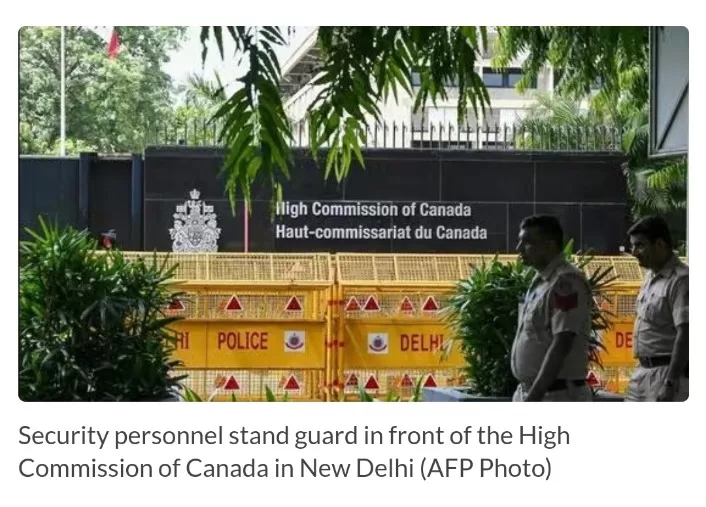
In a recent diplomatic development, India has resumed certain visa services for Canadian citizens. This move comes after a period of suspension that commenced on September 21, owing to heightened diplomatic tensions between the two nations.
According to a statement from the High Commission of India in Ottawa, visa services have been restored for specific categories, including entry, business, medical, and conference visas. However, it’s important to note that a number of categories remain excluded from this reinstatement. These excluded categories encompass tourist, employment, student, film, missionary, and journalist visas.
The decision to resume these services followed a comprehensive review of the security situation, taking into account recent measures adopted by the Canadian authorities. As a testament to the dynamic nature of international relations, it’s crucial to acknowledge that the situation may evolve, as indicated by the Canadian Government.
India’s High Commissioner to Ottawa, Sanjay Kumar Verma, affirmed that only the four aforementioned categories have been reinstated, in accordance with the official press release.
This suspension of visa services was initially enforced due to concerns over safety and security. However, the decision to revive services for specific categories demonstrates a calculated assessment of the prevailing security landscape and aligns with recent developments in Canada.
The official statement further underscores the possibility of additional decisions being communicated in response to ongoing evaluations of the situation. Therefore, the future of visa services remains subject to these continuous assessments.
It’s noteworthy that while e-visas continue to be accessible for citizens of 165 countries, Canada is not included in this list. The resumption of e-visa issuance for Canadian nationals had previously been reinstated in December of the preceding year, following its suspension due to the COVID-19 pandemic.
The initial suspension of visa issuance in September transpired amid strained bilateral relations. The catalyst for this strain was Canadian Prime Minister Justin Trudeau’s assertion in the House of Commons that there were “credible allegations” linking Indian agents to the assassination of pro-Khalistan figure Hardeep Singh Nijjar in Surrey, British Columbia, on June 18.
In response to these allegations, both nations engaged in reciprocal expulsion of diplomats. Furthermore, India recently withdrew diplomatic immunity from 41 Canadian diplomats stationed in the country. Canada has described this act as a “mass expulsion” of its diplomats, while India maintains that it aimed to achieve diplomatic “parity.”
Hardeep Singh Nijjar, a key figure in the secessionist group Sikhs for Justice, met a tragic demise as he was shot in the parking lot of the Guru Nanak Sikh Gurdwara that he presided over in Surrey, British Columbia. India had accused Nijjar of terrorist activities, although these allegations were never subjected to legal scrutiny in Canadian courts. To date, Canada has not produced any substantial evidence linking New Delhi to the aforementioned assassination.
This diplomatic exchange underscores the complex and evolving nature of international relations, wherein the status of visa services remains contingent upon nuanced evaluations and shifting diplomatic landscapes.