


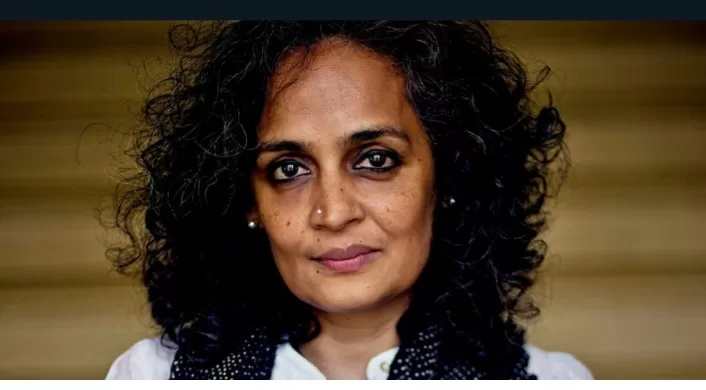
Arundhati Roy, the revered Indian author who clinched the prestigious Booker Prize, is now confronted with the looming specter of prosecution over a speech she delivered in 2010 concerning the embattled region of Kashmir. Her literary accomplishments and impassioned activism, often directed at the administration of Prime Minister Narendra Modi, have solidified her status as a prominent yet divisive figure in India.
A criminal complaint, alleging sedition, had remained mired within India’s notoriously slow-paced criminal justice system since its initial filing over a decade ago in 2010.
However,media reported on Tuesday that V.K. Saxena, the highest-ranking official within the administration governing New Delhi, has granted authorization for the case to advance to the courts.
Saxena’s directive cited ample evidence warranting the case’s progression against Arundhati Roy and her co-defendants “for their speeches at a public function” in the nation’s capital, as reported by The Hindu newspaper.
The original complaint, lodged against Roy and her associates, asserts that they delivered speeches advocating the secession of the region of Kashmir from India. The issue of Kashmir remains one of the most delicate subjects of public discourse within India, a nation that has engaged in two wars and numerous skirmishes with Pakistan over control of the territory.
The Kashmir valley has been plagued by conflict since 1989 when an insurgency against Indian governance was ignited, resulting in the loss of tens of thousands of lives, encompassing Indian troops, militants, and civilians.
In 2010, Arundhati Roy’s residence in New Delhi was besieged by protesters after her remarks from the panel discussion came to light. Tragically, two of her co-defendants have since passed away during the prolonged course of the case, spanning 13 years.
Arundhati Roy, a non-expatriate Indian, made history by securing the esteemed Booker Prize with her acclaimed debut novel, “The God of Small Things,” in 1997. Her influential essays have consistently advocated for the marginalized and dispossessed in India, attracting both acclaim and criticism from the nation’s elite.
In recent years, Roy has evolved into one of the most prominent critics of Prime Minister Modi’s government, which has faced allegations from human rights organizations and others of targeting activists for legal prosecution and curbing free expression.
Reporters Without Borders has issued a stark warning that “press freedom is in crisis” within India. The nation’s ranking on the media freedom index has plummeted from 140 to 161 since 2014, with an 11-place decline recorded in just the past year.