

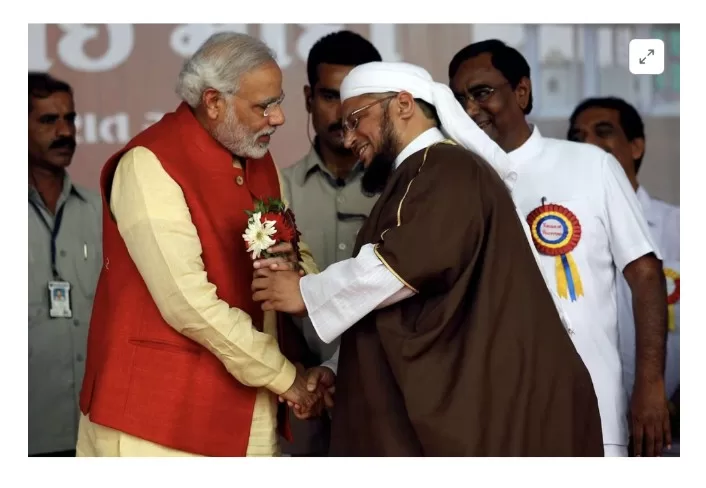
New Delhi:In a distinctive move, the ruling Bharatiya Janata Party (BJP) is actively engaging with underprivileged Muslim voters, aiming to leverage its economic achievements and proposed religion-agnostic laws on inheritance and gender rights. More than 25,000 Muslims, including educators, entrepreneurs, clerics, and retired government employees, have volunteered as “Modi Mitrs” to advocate for the BJP. The party is strategically targeting 65 key seats with a significant Muslim voter population, emphasizing economic policies and proposed legislative reforms.
BJP’s Muslim Outreach Faces Skepticism Amidst Historical Frictions
Despite historical tensions and allegations of anti-Islamic sentiments within the Bharatiya Janata Party (BJP), the party is launching an extensive outreach campaign targeting India’s 200 million Muslim population. The initiative seeks to address economic concerns, particularly among the marginalized “Pasmanda” Muslims, through a network of Modi Mitrs. While the BJP aims to increase its share of the Muslim vote from 9% to 16-17%, critics remain skeptical, citing past instances of religious polarization and discriminatory practices.
Opposition Challenges BJP’s Dual Strategy
Political Landscape:As the BJP strives to maintain its dominance, a newly unified opposition alliance and recent electoral setbacks have heightened concerns within the party. The opposition contends that the BJP’s dual strategy of demonizing Muslim men for its hardline base while wooing Muslim women and marginalized communities may not alter its core anti-minority approach. The upcoming elections, due by May, present a crucial test for the BJP’s outreach efforts and the opposition’s ability to counter them.
Secularism vs. Minority Appeal: BJP’s Narrative Shift
Political Discourse:The BJP’s narrative has shifted, challenging the concept of secularism in India as “minority appeasement.” Analysts note that the BJP’s politicization of Hindu-Muslim fault lines has intensified, with claims that Modi’s cabinet lacks representation from the Muslim community. The BJP’s campaign, unprecedented in its scope, reflects a nuanced strategy that aims to bridge gaps with the Muslim electorate while maintaining a strong stance on cultural nationalism.
Tensions Persist Despite Decrease in Communal Clashes
Sociopolitical Dynamics: While government data suggests a reduction in violent clashes between Hindus and Muslims since the BJP assumed power, tensions linger. Allegations of anti-Islamic hate speech, vigilantism, and property demolitions persist, raising concerns about cultural nationalism and potential Hindu supremacy. Critics argue that the BJP’s political messaging and cultural policies contribute to an environment of fear among Muslims, despite enforcement measures to prevent inter-communal tensions.
Economic Message Takes Center Stage in Modi Mitr Outreach
Political Engagement: Modi Mitrs, chosen for their diverse backgrounds as educators, entrepreneurs, and community leaders, focus on spreading the BJP’s economic message. The party highlights welfare schemes, such as monthly handouts for underprivileged women and housing subsidies, as initiatives benefiting all communities, including Muslims. The BJP’s emphasis on economic development aims to resonate with voters, particularly within the marginalized Muslim population.
By Reuters