

Warsaw, Poland – In a bold move, Polish Prime Minister Mateusz Morawiecki has declared that Poland will no longer provide arms to Ukraine, opting instead to bolster its own defense capabilities. This announcement comes in the wake of a heated dispute over grain exports, which led to the summoning of Ukraine’s ambassador by the Polish government.
Morawiecki stated, “We are no longer transferring weapons to Ukraine because we are now equipping Poland with more advanced weaponry.” Poland has been a steadfast supporter of Ukraine since Russia’s invasion in February 2022, serving as a major supplier of weapons and providing refuge to over a million Ukrainian refugees, who have received various forms of state assistance.
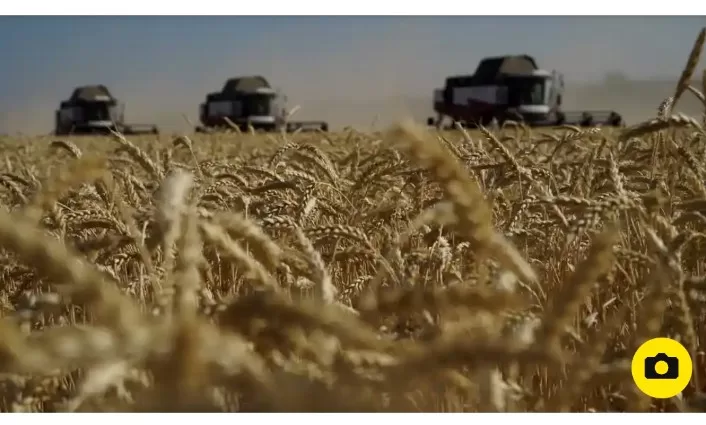
Tensions between Warsaw and Kyiv ignited when Poland imposed a ban on Ukrainian grain imports to safeguard its farmers’ interests, intensifying in recent days. Ukrainian President Volodymyr Zelenskiy addressed the United Nations General Assembly, accusing some European nations of indirectly aiding Russia through their stance on grain exports. He remarked, “It is alarming to see how some in Europe play out solidarity in a political theater, making a thriller out of grain. They may appear to play their own roles, but in reality, they are helping Moscow’s agenda.”
Morawiecki cautioned Ukraine’s authorities, warning of potential further import bans on Polish soil if the conflict escalates. He emphasized the significant destabilization of Poland’s farming industry and the paramount importance of safeguarding Polish farmers.
The Black Sea shipping lanes, crucial for Ukraine’s grain exports before the war, have been disrupted by Russia’s invasion, leading the European Union (EU) to become a vital transit route and export destination for Ukrainian grain. In May, the EU limited grain imports to Bulgaria, Hungary, Poland, Romania, and Slovakia to protect local farmers who blamed the imports for falling prices in their markets. However, the European Commission recently decided to end the import ban, citing the disappearance of market distortions in the five member states bordering Ukraine.
Poland, Hungary, and Slovakia promptly defied this decision. This matter carries particular sensitivity in Poland as elections approach next month, where the ruling populist right-wing Law and Justice party enjoys strong support in farming regions. Morawiecki asserted, “We were the first to do a lot for Ukraine, and that’s why we expect them to understand our interests.”
Kyiv’s response to the warnings from Poland, Hungary, and Slovakia was to announce a complaint to the World Trade Organization (WTO). Poland’s foreign ministry responded by stating that “putting pressure on Poland in multilateral forums or sending complaints to international courts are not appropriate methods to resolve differences between our countries.”
Following Poland’s summoning of Ukraine’s ambassador, Kyiv called upon Warsaw to “set aside emotions” and adopt a “constructive” approach in resolving the dispute.
In this evolving geopolitical drama, Poland’s strategic decision to halt arms shipments to Ukraine has raised questions about the future of their bilateral relationship amidst the tumultuous backdrop of grain disputes and regional politics.