


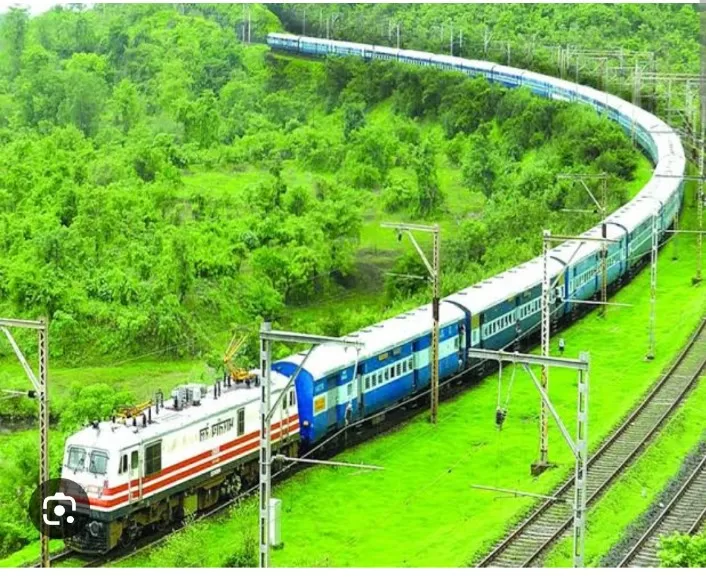
New Delhi – The Indian Railways has presented an ambitious proposal to invest an astounding ₹4.2 lakh crore in the extensive multi-tracking of seven high-density corridors. These crucial routes encompass the Delhi-Howrah, Mumbai-Howrah, Delhi-Mumbai, Delhi-Guwahati, Delhi-Chennai, Howrah-Chennai, and Mumbai-Chennai connections. The primary objective of this substantial investment is to facilitate the introduction of faster passenger trains and expedite the movement of freight.
In a formal proposal slated for the Union Cabinet, the Ministry of Railways has outlined an extensive ten-year program, spanning from 2024-25 to 2033-34. This initiative involves both doubling and laying of third and fourth lines on various stretches of these corridors, tailored to the demands of traffic. Furthermore, the plan includes the construction of flyovers and underpasses. This proposal coincides with the Railways’ intentions to introduce modern Vande Bharat trains with sleeper facilities, boasting a remarkable maximum design speed of 220 kmph.
The Ministry of Railways has identified 213 projects of significance on these corridors, which have surpassed their saturation point, and an impressive 200 of these projects will be completed during the first phase. To expedite decision-making, the railway authorities have proposed an enhancement of financial powers for the Railway Board and the Minister.
The primary rationale behind this monumental government investment in the seven corridors is the urgent need to augment capacity for operating more trains. Despite these corridors constituting merely 16% of the extensive Indian Railways network, with a combined length of 10,969 km, they shoulder a staggering 41% of the total traffic. This immense pressure has substantially constrained the introduction of additional trains or enhancing their speeds, as reported by reliable sources.