


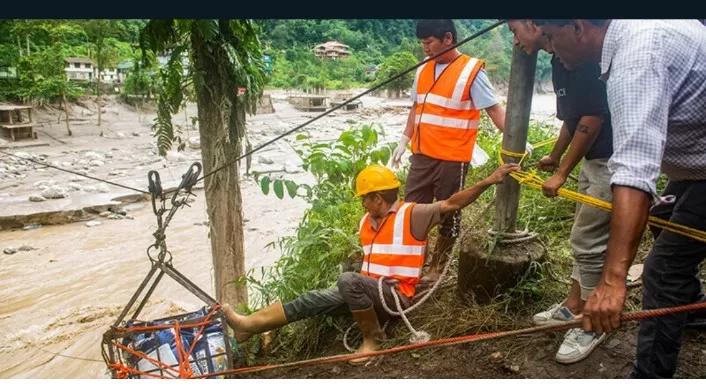
In a tragic turn of events, the northeastern region of India has witnessed the loss of at least 77 lives due to catastrophic floods, with many still stranded despite receding waters. The calamity unfolded in Sikkim state when a high-altitude glacial lake unexpectedly ruptured, unleashing torrents of water.
As we confront this devastating incident, scientists are sounding an alarm, emphasizing that such disasters loom larger over the Himalayas due to rising global temperatures and the ensuing ice melt, a direct consequence of climate change.
Relief commissioner Anilraj Rai reported, “A total of 29 bodies have been retrieved from different parts of Sikkim.” Meanwhile, in West Bengal state’s Jalpaiguri district, authorities confirmed the recovery of another 48 bodies. Official statistics indicate that over 100 individuals remain unaccounted for.
Despite the Teesta River’s water levels returning to normalcy four days after the initial flooding, many challenges persist. More than 2,500 flood-stranded people have been successfully rescued, but the destruction of critical infrastructure, including roads, bridges, and communication lines, has impeded evacuation efforts.
Compounding the rescue operation, adverse weather conditions have delayed airlift missions, leaving approximately 3,000 individuals stranded in relief camps in northern Sikkim. Tragically, the floods have caused damage to over 1,200 houses in the region.
Among the casualties, eight Indian army soldiers stationed in Sikkim lost their lives. India’s defense ministry disclosed that the floods had swept away “firearms and explosives” from military camps. In a distressing incident, local media reported that a mortar shell exploded in floodwaters in West Bengal, resulting in two fatalities and four injuries.
The catastrophe unfolded following intense rainfall that triggered the rupture of the high-altitude Lhonak Lake, nestled at the glacier’s base within the vicinity of Kangchenjunga, the world’s third-highest mountain. The unleashed water surged downstream, exacerbating an already swollen river due to monsoon rains, causing significant damage to a dam and sweeping away homes.
Climate experts emphasize that Himalayan glaciers are melting at an unprecedented rate, amplifying the vulnerability of local communities to unforeseeable and financially burdensome disasters. The International Centre for Integrated Mountain Development (ICIMOD) research group asserts that climate change is the underlying cause of these distressing events. ICIMOD’s Arun Bhakta Shrestha cautioned, “Similar glacial lake outburst flood events are very likely.”
With Earth’s average surface temperature having risen by nearly 1.2 degrees Celsius since pre-industrial times, high-mountain regions worldwide have experienced double the rate of warming, underscoring the urgent need for concerted global efforts to address the climate crisis.