

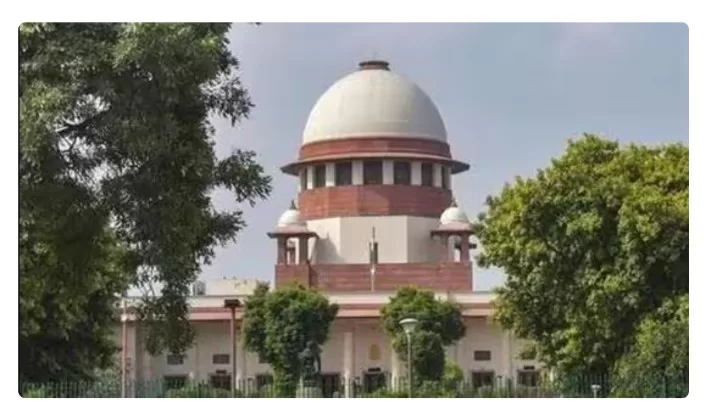
In a significant legal development, the Central government informed the Supreme Court today that it does not wield functional control over the Central Bureau of Investigation (CBI), emphasizing the agency’s status as an independent investigative entity. Solicitor general Tushar Mehta, representing the government, made this submission while opposing a suit filed by the West Bengal government.
The suit challenges the CBI’s authority to investigate cases after the state withdrew its consent under the Delhi Special Police Establishment (DSPE) Act in November 2018. Mehta, terming the suit as “mischievous,” highlighted that the Union government, specifically the Department of Personnel and Training (DoPT), is named as a party, while the CBI, the investigating body, is not.
Addressing the bench of justices BR Gavai and Aravind Kumar, Mehta clarified, “CBI is not the central government. If relief is sought against CBI, it must be directed against CBI. We have no superintendence or control over it. It is an independent body.”
The bench acknowledged the agency’s administrative placement under the central government but underscored the understanding that, in matters of investigation, the CBI maintains absolute freedom.
Mehta elaborated on the legal framework, citing the Allocation of Business Rules of the Union Government, placing the CBI under the DoPT. However, he emphasized that the government exercises no “functional control” over the CBI concerning the investigation of cases. He contended, “The Union government cannot direct investigation or monitor prosecution, especially in cases where ministers in the Central government might be accused.”
The suit filed by the West Bengal government seeks a court directive for the Centre to cease the investigation into a list of 12 cases handled by the CBI. Mehta urged the dismissal of the suit, arguing that there is no cause of action against the Centre, asserting, “If DoPT cannot direct registration of an offense or monitor an investigation, how can the suit lie against DoPT?”
The hearing will resume on November 23, as arguments from Senior advocate Kapil Sibal, representing the state, remain inconclusive.