


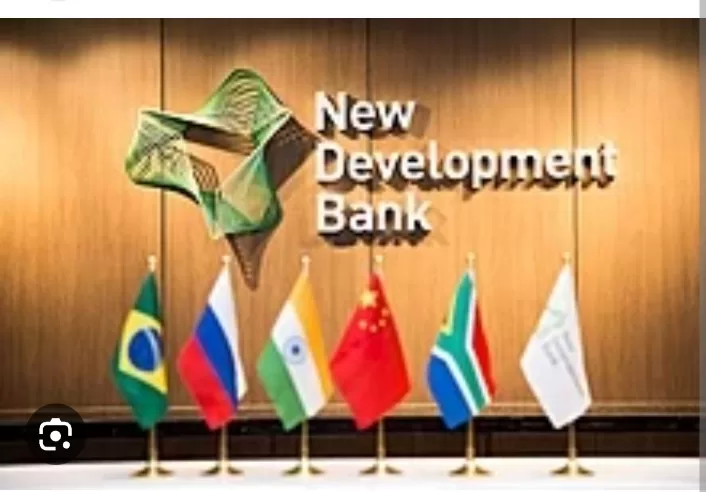
The imperative to fortify the New Development Bank (NDB), commonly known as the BRICS Development Bank, stands as a preeminent item on the BRICS summit’s agenda. The NDB, bolstered by the collective prowess of five emerging global powerhouses — Brazil, Russia, China, India, and South Africa — has ignited conjecture regarding its potential to supplant established financial institutions, including the International Monetary Fund (IMF), in furnishing financial aid to burgeoning economies.
Amidst this backdrop, it is prudent to delve into the intricacies of this prospect. The NDB, conceived as an alternative to the prevailing international financial architecture, has endeavored to extend financial assistance to developing nations by circumventing the stringent conditionalities often associated with traditional lending bodies like the IMF. However, a comprehensive evaluation is warranted to ascertain whether this endeavor can indeed manifest as a substantive replacement for the IMF.
For a nuanced analysis, let us consider the empirical evidence. The NDB’s funding corpus, while substantial, does not yet mirror the expanse of the IMF’s financial arsenal. The IMF’s multilateral resources and expertise have historically been indispensable during global financial crises, as evidenced by its involvement during the 2008 financial meltdown. It remains to be seen whether the NDB can match such prowess in times of exigency.
Furthermore, the NDB’s efficacy as an alternative hinges on its capacity to adopt universally accepted standards and regulations. The IMF, over decades, has cultivated a set of rules and norms that guide international financial cooperation. For the NDB to supplant the IMF, it must demonstrate a comparable commitment to these established frameworks, ensuring consistent and transparent lending practices.
In contemplating the NDB’s capacity to replace the IMF, it is instructive to scrutinize its operational sphere. While the NDB champions the cause of developing nations, it must traverse the delicate balance between promoting their growth and safeguarding its own financial stability. The IMF’s long-standing experience in navigating the intricate dynamics of global finance serves as a point of reference here.
Examples from history underline the multifaceted nature of this discourse. The NDB’s successful forays in infrastructure financing and sustainable development projects reflect its potential to address pressing challenges. However, the IMF’s role in providing liquidity and crisis management during economic upheavals cannot be undermined.
In summation, while the NDB’s aspirations to usurp the IMF’s role as a lender to developing economies are commendable, the journey to such a transformation is multifarious. A comprehensive evaluation of its resources, adaptability to international norms, and crisis management capabilities is essential. The NDB’s growth trajectory, marked by its accomplishments and challenges, shall be pivotal in shaping the discourse of its potential to emerge as a substantial alternative to the IMF.