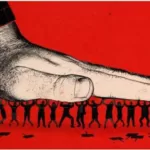


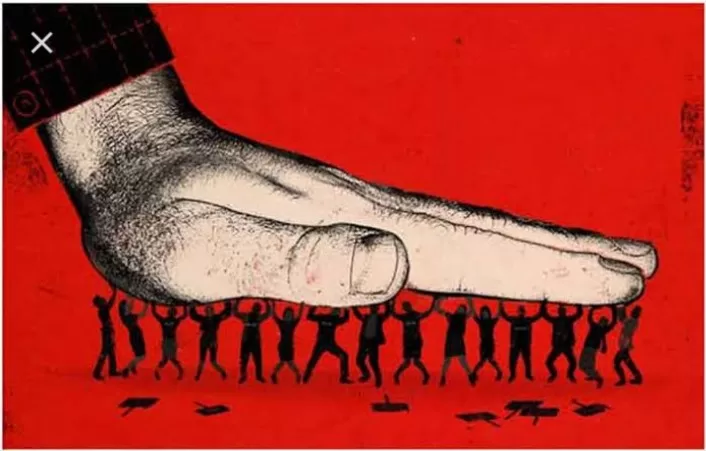
The trajectory of liberal democracy, once a beacon of hope and a bastion of enlightenment, is now entangled in the labyrinthine webs of decline. The very ideals that underpinned the edifice of democratic governance are now being corroded by a confluence of factors, casting ominous shadows over the future of this cherished political paradigm.
A poignant examination of the global landscape reveals that the erosion of liberal democracy is not a localized anomaly, but a ubiquitous phenomenon. The Freedom House’s Freedom in the World 2021 report paints a disconcerting picture, indicating that political rights and civil liberties are regressing in more countries than they are advancing. A mere 20% of the world’s population resides in countries that enjoy “Free” status, an alarming plummet from 44% in 2005.
The very essence of liberal democracy hinges on the principles of individual rights, rule of law, and pluralism. Yet, in an era plagued by authoritarian resurgence and the rise of illiberal populism, these principles are being trampled upon. The global ascent of populist demagogues who capitalize on the fears and insecurities of the masses has disrupted the delicate equilibrium between the majority and minority rights, eroding the checks and balances integral to the democratic framework.
Recent events corroborate the unraveling fabric of liberal democracy. The chilling implications of Hungary’s 2020 “Enabling Act” and Poland’s systematic dismantling of judicial independence underscore the erosion of democratic norms in the European Union itself. Likewise, the United States, once considered the torchbearer of liberal democracy, witnessed the unprecedented assault on its Capitol in 2021, a grim testament to the fraying social fabric.
Economic inequality, a scourge that gnaws at the very foundation of democratic ideals, has burgeoned with alarming consequences. The global wealth gap is staggering, with the top 1% of the world’s population owning more wealth than the bottom 50%, as per Oxfam’s 2022 report. The disillusionment stemming from this stark inequality festers into a breeding ground for discontent, providing fertile ground for the rise of populist demagogues.
The weaponization of misinformation and disinformation in the digital age has proven to be a potent tool in undermining democratic institutions. The Oxford Internet Institute’s Computational Propaganda Research Project revealed that social media platforms have been manipulated to propagate false narratives and distort public opinion in over 80 countries. The erosion of a shared reality fuels polarization, further fracturing the unity essential to democratic discourse.
In summation, the decline of liberal democracy is an ominous reality that beckons our attention. The global landscape is replete with examples that substantiate the dilution of democratic ideals, with encroachments upon individual rights, erosion of democratic norms, and the rise of illiberalism. As the very foundations of this cherished political paradigm tremble under the weight of populism, inequality, and digital manipulation, the onus rests upon the advocates of democracy to reclaim and reinvigorate the principles that have nurtured the evolution of civilization.