

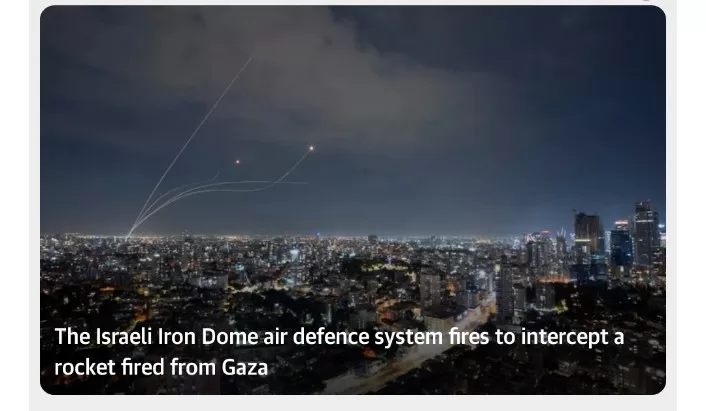
Gaza, an embattled region, finds itself enveloped in an eerie silence as the Israeli military escalates its aerial assaults, creating an unsettling landscape of rising smoke. A formidable blackout in communications has left Gaza’s inhabitants in a state of profound uncertainty, concealing the true extent of casualties from the relentless airstrikes.
Israel and Hamas Conflict – Continuous Updates
Palestinians, humanitarian organizations, journalists, and civil society entities lament their inability to connect with their associates and family members within Gaza. Israel’s strategic maneuver to dismantle internet and communication networks has effectively severed this beleaguered territory from the outside world.
NetBlocks, a vigilant watchdog overseeing cybersecurity and internet activity, documented a pronounced collapse in connectivity within the Gaza Strip. Paltel, the Palestinian telecommunications provider, confirmed the dire consequences of the bombardment, stating that it resulted in the “complete disruption” of internet, cellular, and landline services.
Shortly after these reports, the region witnessed an extraordinary barrage of heavy artillery, with the Israel Defense Forces announcing a relentless surge in their air and ground campaigns within Gaza. With most electricity already cut off and generator fuel reserves depleted, the 2.3 million inhabitants of Gaza now confront a harrowing isolation from global communication.
Explosions from unceasing airstrikes illuminated the skies over Gaza City for hours. However, the communication blackout rendered the immediate assessment of casualties and ground incursion details impossible.
Tareq Abu Azzoum, a correspondent for Al-Jazeera on the scene, reported that Palestinians are “isolated within the territory” without any access to vital networks.
For Palestinians residing beyond Gaza’s borders, heartfelt attempts to reach their relatives within this beleaguered enclave have proven futile. As poet and author Mohammed El-Kurd poignantly tweeted, “No one I know in Gaza is answering my texts.”
The Committee to Protect Journalists has expressed deep concern, highlighting that the world is now “losing a window into the reality” of this conflict. They cautioned against the perils of this information void, emphasizing its potential to be filled with dangerous propaganda, disinformation, and misinformation.
The loss of communication represents yet another severe blow to a medical and humanitarian system already teetering on the brink of collapse under Israel’s three-week siege. Lynn Hastings, the UN humanitarian coordinator for Palestine, articulated the critical issue, stating that without functioning phone lines and internet access, hospitals and aid operations are incapacitated. She further stressed the importance of adhering to the rules of war, which mandate the protection of civilians.
Prominent relief agencies and human rights organizations, including Unicef, ICRC, Médecins Sans Frontières, and Amnesty International, have all reported the loss of contact with their staff in this embattled territory.
The Palestinian Red Crescent Society released a statement lamenting their “complete loss of contact with operation rooms” due to Israeli authorities’ shutdown of landline, cellular, and internet communications. Their apprehension centers on the ability of their teams to continue delivering vital emergency medical services.
Tedros Adhanom Ghebreyesus, the director-general of the World Health Organization (WHO), voiced his deep concern about the siege’s impact on the safety of health facilities, health workers, and vulnerable patients.
Erika Guevara-Rosas, senior director of research, advocacy, policy, and campaigns at Amnesty International, stressed the gravity of the communication blackout. She emphasized its hindrance to documenting violations and war crimes against Palestinian civilians, calling for the swift restoration of internet and telecommunications infrastructure to facilitate rescue operations amid the relentless Israeli airstrikes and expanding ground operations.
This situation paints a stark picture of Gaza’s isolation, with its residents enduring unimaginable hardships as they remain cut off from the world, bearing the brunt of a conflict that has now intensified to a critical juncture.