

New Delhi: With the announcement of elections by the Election Commission of India comes the enforcement of the Model Code of Conduct (MCC), a comprehensive set of guidelines for candidates and political parties during the electoral process. The MCC, designed to ensure equitable elections, remains in effect until the results are officially declared.
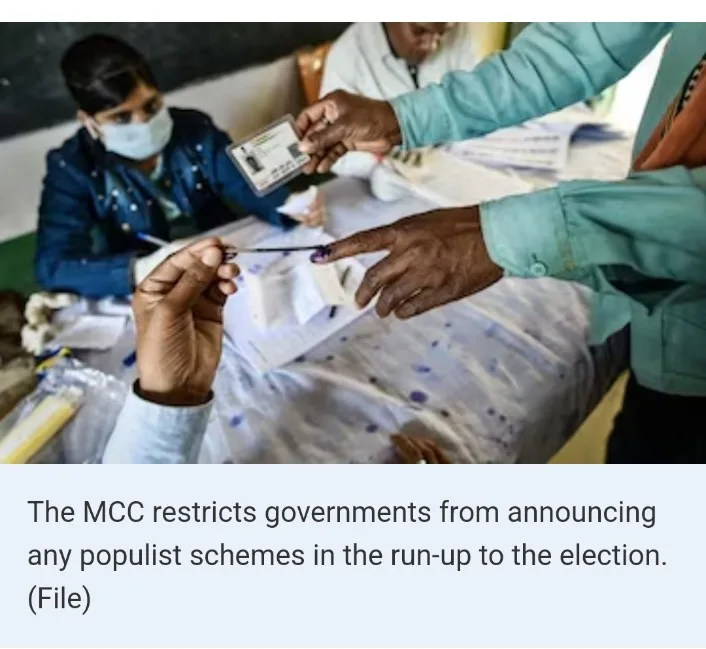
Candidates and political entities are mandated to strictly adhere to the MCC directives, and any breaches may lead to punitive action by the ECI. Additionally, the MCC prohibits governments from introducing any populist schemes in the lead-up to the elections.
What is the Model Code of Conduct?
The Model Code of Conduct is a set of regulations issued by the Election Commission to oversee the campaigning activities of political parties and candidates during elections. Its primary objective is to facilitate impartial and transparent elections by preventing any actions that could influence voters or disrupt the electoral process.
Implications of the Model Code of Conduct:
1. Restrictions on Announcements: Candidates are barred from announcing financial grants once elections are declared.
2. Government Projects: The government cannot initiate new projects or lay foundation stones for new endeavors.
3. Infrastructure Development: Assurances related to infrastructure development, such as road construction or provision of water facilities, are prohibited.
4. Ad-hoc Appointments: Appointments in government or public undertakings that may sway voters are forbidden.
5. Use of Resources:Utilization of government resources for election campaigning, including transport and security personnel, is strictly prohibited.
6. Media Usage: Official mass media cannot offer biased news coverage or propaganda in favor of the ruling party.
7. Public Spaces: Municipalities must provide free access to public areas for electoral gatherings.
8. Government Facilities: Government facilities like rest houses or dak bungalows should not be utilized for electoral purposes.
9. Prevention of Malpractices:Exploiting caste or communal sentiments, spreading rumors, bribery attempts, or voter intimidation are strictly prohibited.
History of MCC:
The Model Code of Conduct was initially employed during the 1960 Assembly elections in Kerala and was later extended nationwide during the 1962 Lok Sabha elections. Over the years, it has evolved to address various challenges in ensuring fair elections, with stricter enforcement witnessed during the 1991 Lok Sabha elections due to concerns over repeated violations and corrupt practices.