


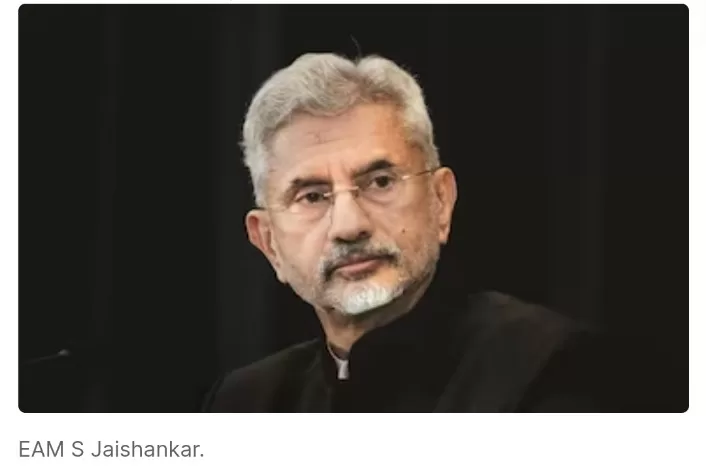
In a recent address at the International Relations Conference on India’s Strategic Culture in Pune, Minister of External Affairs Dr. S Jaishankar emphasized the importance of shaping international relations with distinctly Indian characteristics. The conference, organized by an educational institute, focused on addressing global and regional challenges.
Jaishankar raised a crucial question regarding the development of Indian strategic culture, suggesting that to create international relations with Indian characteristics, there is a need to dedicate more time, attention, and energy to understanding India’s rich reservoir of culture, knowledge, history, and traditions.
Drawing from his diplomatic experience, Jaishankar highlighted a past interaction with American peers discussing Afghanistan. He pointed out that even after two decades in Afghanistan, much of the American understanding was shaped by the British narrative, prompting him to question the depth of their knowledge about the region.
Referencing the Durand Line, the international border between Afghanistan and Pakistan, Jaishankar stressed the importance of cultural perspectives in shaping geopolitical understanding. He emphasized that unless India puts forth its own cultural lens, others will continue to view it through their own.
Jaishankar noted a disparity in how Western intellectuals perceive Chinese and Indian histories, citing Winston Churchill’s extreme example of dismissing India. He pointed out that while the West readily accepts China’s 5000-year-old history, India often does not receive the same acknowledgment.
The minister also highlighted the influence of British intellectual concepts and constructs, noting that terms like Pyrrhic victory, Gordian knots, and Trojan horse, though universalized, originate from British traditions. Jaishankar urged a broader recognition of India’s contributions to intellectual concepts, traditions, and constructs, citing examples like Kautilya predating Lord Palmerston in discussing permanent interests.
As India seeks to assert its unique strategic culture on the global stage, Jaishankar’s remarks underscore the importance of understanding and embracing the country’s diverse cultural and historical foundations.