



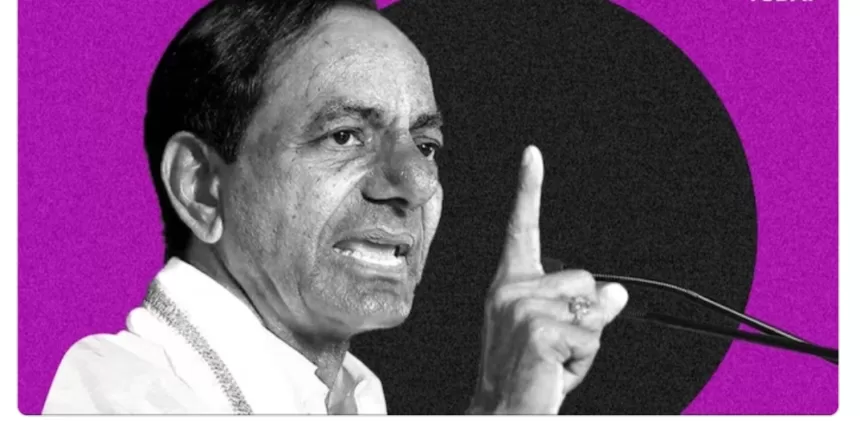
New Delhi: In a significant turn of events, Telangana Chief Minister K Chandrashekar Rao tendered his resignation on Sunday following the defeat of the Bharat Rashtra Samithi (BRS) in the recently concluded state Assembly elections. The Congress secured a substantial victory, claiming 64 out of the total 119 assembly seats. A Congress delegation, led by party leaders, met with Telangana Governor Tamilisai Soundararajan to stake a claim to form the new government.
The ruling BRS, facing its first defeat since the formation of the state in 2014, managed to secure only 39 seats. Telangana Minister and BRS working president KT Rama Rao gracefully accepted the defeat, expressing disappointment and extending congratulations to the Congress party.
Telangana, with 119 assembly seats, witnessed a voter turnout of 71.34% on November 30. As counting commenced on Sunday, the Congress party steadily gained momentum, leading to KCR’s resignation.
In a gracious acknowledgment of the people’s mandate, Congress President Mallikarjun Kharge thanked the voters of Telangana. However, he also addressed the party’s underwhelming performance in Chhattisgarh, Rajasthan, and Madhya Pradesh.
Exit polls had predicted a victory for Congress, with India Today-Axis My India forecasting a 42% vote share and 69 seats for the party. The BRS was expected to secure 39% vote share.
In response to the election outcome, Prime Minister Narendra Modi expressed gratitude for the increasing support to the BJP in Telangana. The BJP managed to secure eight seats in the state.
With Congress poised to form the government in Telangana, a delegation of party leaders, including Karnataka Deputy Chief Minister DK Shivakumar, met Telangana Governor Tamilisai Soundararajan to formalize the government formation process. The newly elected MLAs are set to convene on Monday at 9:30 am.
In the midst of the electoral dynamics, AIMIM chief Asaduddin Owaisi’s brother Akbaruddin retained his seat in Chandrayangutta, securing victory by a margin of 81,660 votes.
As Telangana undergoes this political shift, the future of governance in the state hangs in the balance, awaiting the formalization of the Congress-led government.