



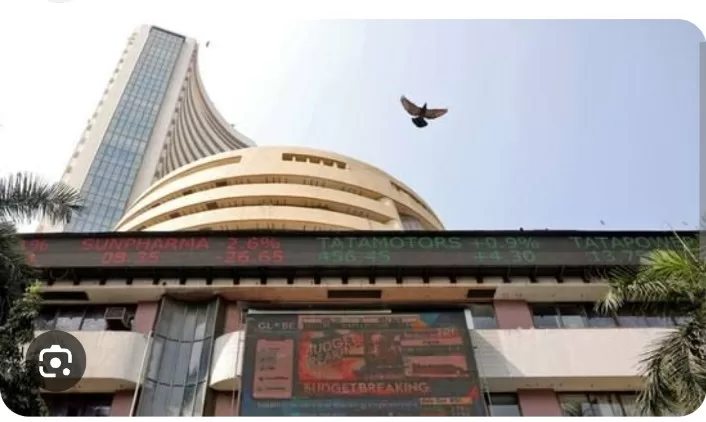
India’s stock market is on track to become the world’s seventh-largest, surpassing Hong Kong, as the total market capitalization of listed Indian companies reached $3.7 trillion by the end of October. This positive momentum is fueled by investor confidence following the Bharatiya Janata Party’s state election victories and robust macroeconomic indicators, the Financial Times reported.
In November, Indian stock prices surged, setting the stage for India to secure the seventh-largest global position, trailing behind the New York Stock Exchange, Nasdaq, Shanghai, Euronext, Japan, and Shenzhen.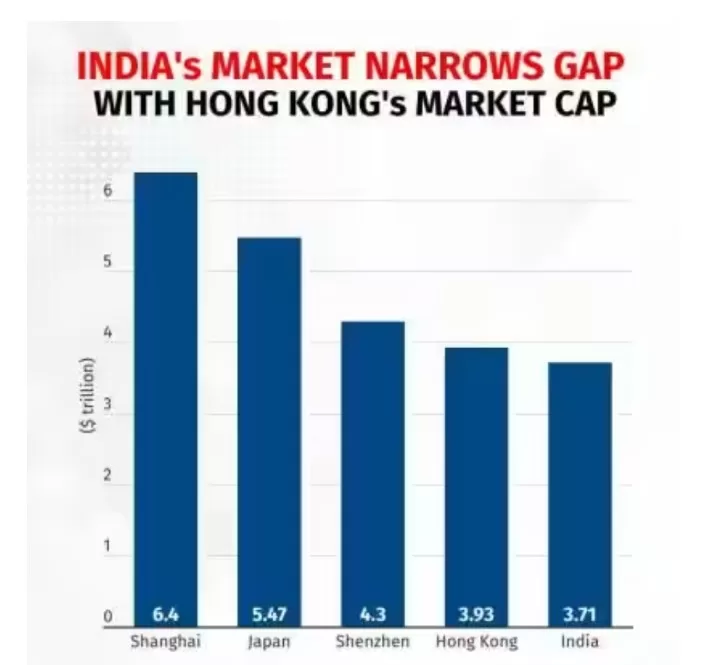
Hong Kong’s market has been experiencing a bearish slump, mainly attributed to China’s deteriorating real estate sector. The Hang Seng index, comprising mainly China’s mainland companies, has been impacted by higher interest rates, elevated inflation, sluggish foreign investment, and turmoil in the housing market.
The surge in Indian equity benchmarks, with the S&P BSE Sensex and Nifty50 rising 14% and 15%, respectively, contrasts with a 17% fall in Hong Kong’s benchmark Hang Seng index this year.
Several global brokerages, including JPMorgan, Morgan Stanley, CLSA, and Nomura, have upgraded India to an ‘overweight’ rating, citing strong second-quarter earnings and positive economic indicators. In contrast, around 30 local brokerages have closed offices in Hong Kong this year, following a record 49 closures in 2022.
India’s BSE market capitalization has more than doubled in the last five years, reaching over Rs 343.5 lakh crore, while Hong Kong’s IPOs are at a 20-year low, and funds raised have declined by 63% year-on-year for the first ten months of this year.
The Indian government’s reform and macro-stability agenda, along with a positive outlook for capital expenditure and profits, are contributing to the country’s growing stock market stature. The milestone achievement of crossing the $4 trillion mark on December 5, 2023, marks India’s position as the world’s fifth-largest equity market.