


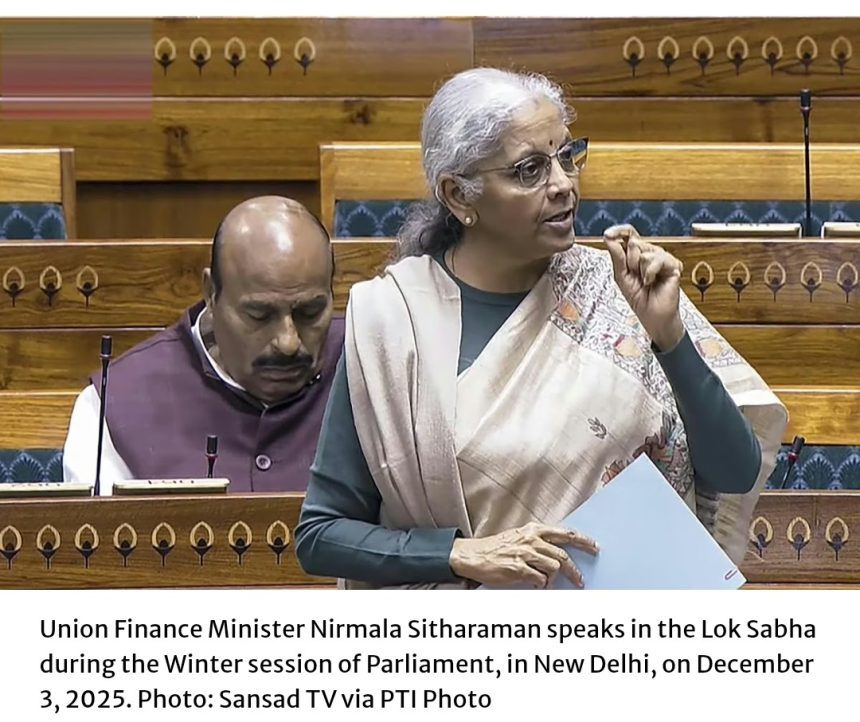
New Delhi, India’s lower house of parliament-Loksabha on Wednesday passed the Central Excise (Amendment) Bill, 2025, restoring higher excise duties on cigarettes as the government prepares to phase out the temporary compensation cess introduced under the Goods and Services Tax (GST) regime.
Finance minister Nirmala Sitharaman told the Lok Sabha that the move was not a new tax or cess but a return to pre-GST excise duty levels, ensuring the overall tax burden on cigarettes does not decline once the compensation cess – used to reimburse states for revenue losses during the Covid-19 pandemic – expires after the final loan repayments.
“This is excise duty, not cess,” Ms Sitharaman emphasised. “It forms part of the divisible pool and will be shared with states in accordance with Finance Commission recommendations.
The legislation addresses a structural anomaly created when the 2017 GST rollout slashed the basic excise component on cigarettes to a nominal level, relying instead on a high compensation cess to maintain revenue. With the cess scheduled to lapse once outstanding borrowings are cleared, the government has opted to raise the underlying excise rate to preserve the fiscal yield.
Ms Sitharaman rejected opposition claims that the changes would hurt the beedi industry or its workers. “There is not even a single paisa increase in taxation on beedis,” she said, adding that the government continues to provide health coverage, housing subsidies and educational scholarships to beedi workers.
The finance minister also highlighted long-running efforts to encourage tobacco farmers to switch crops. Under the National Agricultural Development Scheme’s diversification programme, more than 112,000 acres were shifted from tobacco to alternative crops between 2018 and 2022 across 10 major tobacco-growing states, including Andhra Pradesh, Karnataka and Uttar Pradesh.
Annual tobacco duty increases were routine before GST, Ms Sitharaman noted, and the government remains committed to public health objectives while protecting state finances.
The bill cleared the Lok Sabha without division and is expected to pass smoothly through the upper house.