



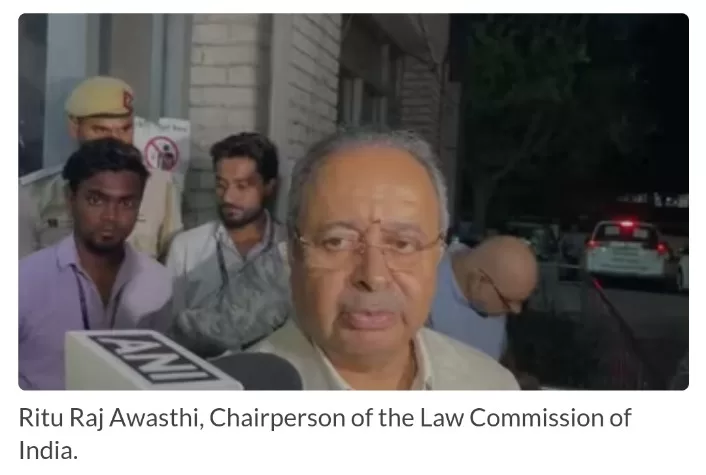
New Delhi – The esteemed Law Commission of India convened on Wednesday to finalize a comprehensive report addressing critical legal issues, encompassing concurrent elections, the minimum age of consent, and the implementation of online First Information Reports (FIRs).
In a groundbreaking move, the Law Commission, chaired by the distinguished Ritu Raj Awasthi, has advocated for a significant alteration to the Protection of Children from Sexual Offences (POCSO) Act by recommending a reduction in the minimum age of consent from 18 to 16. This landmark proposal aims to reshape the legal framework surrounding child protection in India.
Additionally, the Commission has meticulously crafted a proposal to usher in legislation that would facilitate the convenient online submission of First Information Reports (FIRs). This progressive step could revolutionize the way law enforcement agencies handle initial complaints, offering a more accessible and efficient avenue for reporting crimes.
Chairperson Ritu Raj Awasthi, when questioned about the report concerning ‘One Nation, One Election,’ indicated that further refinement is needed before finalization. The much-anticipated report on simultaneous elections in the country remains a work in progress, with no tentative release date provided.
After meticulous deliberation and scrutiny, the 22nd Law Commission is set to submit its comprehensive reports on these critical matters to the Ministry of Law and Justice. This development follows closely on the heels of a high-level committee, led by former President Ram Nath Kovind, which recently initiated discussions on the feasibility of synchronized elections across the nation.
The proposal for simultaneous elections, first endorsed by the Law Commission in 2018, addresses the challenges posed by frequent elections and underscores the need for a practical constitutional framework. The Election Commission of India has also voiced support for the concept, citing logistical, financial, and legal feasibility based on thorough analysis and historical precedents.
However, it’s essential to note that opposition parties have vociferously contested this notion, arguing that synchronized elections may inadvertently favor the incumbent government.
As these pivotal reports take shape, India awaits the potential transformation of its legal landscape, driven by the vision of the Law Commission of India and its commitment to upholding justice and safeguarding the rights of its citizens.