



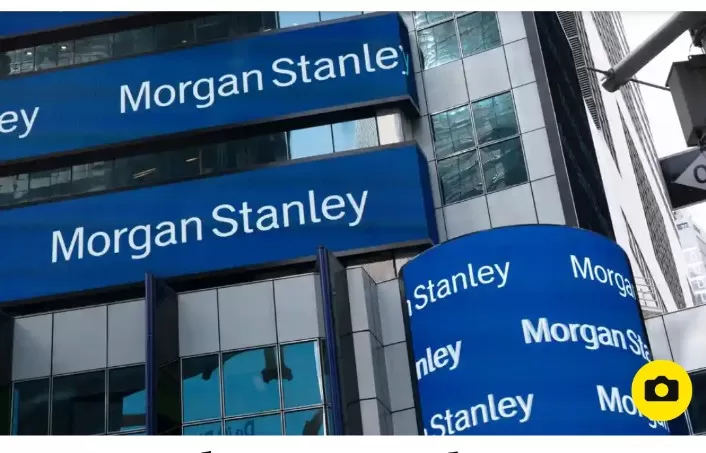
As the United Nations sounds alarm bells over potential war crimes in the Israel-Gaza conflict, Wall Street appears to be eyeing substantial financial gains. During their third-quarter earnings calls this month, financial analysts from Morgan Stanley and TD Bank openly discussed the potential profits that could be generated from the ongoing conflict between Israel and Hamas.
The grim death toll, which currently stands at over 8,000 Palestinians and over 1,400 Israelis, wasn’t the primary concern for TD Cowen’s Cai von Rumohr, a managing director and senior research analyst specializing in the aerospace industry. Instead, he inquired about the economic implications for General Dynamics, a prominent aerospace and weapons company in which TD Asset Management holds over $16 million in stock.
In light of President Joe Biden’s $106 billion aid request to Congress for Israel, Ukraine, and Gaza, the aerospace and weapons sector experienced a substantial 7% increase in value in the immediate aftermath of Hamas’s October 7 attack on Israel and Israel’s subsequent military operations in Gaza. Von Rumohr observed, “Hamas has created additional demand. We have this $106 billion request from the president. Can you provide us with insights into areas where you anticipate a surge in demand?”
Jason Aiken, the executive vice president of technologies and chief financial officer of General Dynamics, responded, “While the Israel situation is undoubtedly dire and still evolving, if we consider the potential increase in demand, one area that stands out is likely in the artillery sector.”
The following day, von Rumohr issued a “buy” rating for General Dynamics’ stock.
Morgan Stanley’s head of aerospace and defense equity research, Kristine Liwag, echoed a similar sentiment during the earnings call for Raytheon on October 24. She noted, “When we examine the White House’s $106 billion supplemental funding request, we see allocations for equipment destined for Ukraine, air and missile defense systems for Israel, and stockpile replenishments for both. This aligns well with the Raytheon Defense portfolio.”
Greg Hayes, chairman and executive director of Raytheon, stated, “Across the entire Raytheon portfolio, we anticipate benefiting from this rearming process. Furthermore, we expect an increase in the Department of Defense’s top-line budget.”
Remarkably, these financial discussions appear to contrast with the “statement on human rights” issued by these companies and their explicit endorsements of the Universal Declaration of Human Rights and UN Guiding Principles on Business and Human Rights.
Aside from the dispassionate dialogue about the financial advantages linked to distant armed conflicts, these conversations raise concerns about whether major institutional shareholders of weapons stocks adhere to their own human rights policies.
Morgan Stanley’s “Statement on Human Rights” affirms, “We operate with the intention of respecting, protecting, and promoting the full spectrum of human rights, as defined in the United Nations’ Universal Declaration of Human Rights. We acknowledge the corporate responsibility to respect human rights, as articulated in the United Nations’ Guiding Principles on Business and Human Rights.”
TD’s “Statement on Human Rights” similarly asserts, “Our commitment to uphold human rights aligns with the corporate responsibility to respect human rights, as outlined in the United Nations Guiding Principles on Business and Human Rights. Since 2018, we have been actively reviewing our practices and procedures, with a commitment to integrating the UNGP throughout our operations.”
However, a mere three days into the Israel-Hamas conflict, the United Nations’ Human Rights Council issued a stern warning that “there is already clear evidence that war crimes may have been committed in the latest eruption of violence in Israel and Gaza, and those responsible for violating international law and targeting civilians must be held accountable for their actions.”
The Human Rights Council further revealed that it had been collecting and preserving evidence of war crimes committed by all parties since October 7, 2023, when Hamas initiated a complex attack on Israel and Israeli forces responded with airstrikes in Gaza. Amnesty International and Human Rights Watch have echoed these assessments.
“The UN Guiding Principles on Business and Human Rights clearly expect companies to uphold human rights throughout their entire supply chain,” remarked Cor Oudes, the program leader of humanitarian disarmament, business conflict, and human rights at PAX for Peace, a non-governmental organization based in the Netherlands advocating for the protection of civilians during wartime.
For banks, this involves ensuring that their clients or the companies they invest in do not engage in or contribute to human rights violations or breaches of international humanitarian law. If a bank invests in an arms manufacturer that supplies weapons to countries involved in severe human rights violations or IHL breaches, according to the UN Guiding Principles, the bank bears a responsibility to prevent further violations and mitigate the existing impact on human rights.
However, the United Nations is not the ultimate legal authority determining whether U.S. companies are complicit in human rights violations, creating a significant loophole for institutional investors and arms manufacturers.
Shana Marshall, an expert on finance and the arms trade and the associate director of the Institute for Middle East Studies at George Washington University, explained, “The Universal Declaration of Human Rights is only as effective as its interpretation by the host government, in this case, the U.S. These analysts can be assured that the U.S. government is unlikely to interpret the law in a way that hinders the export of weapons to countries with which the U.S. doesn’t have a comprehensive embargo, irrespective of human rights considerations.”
Morgan Stanley and TD Bank declined to respond to requests for comment.