



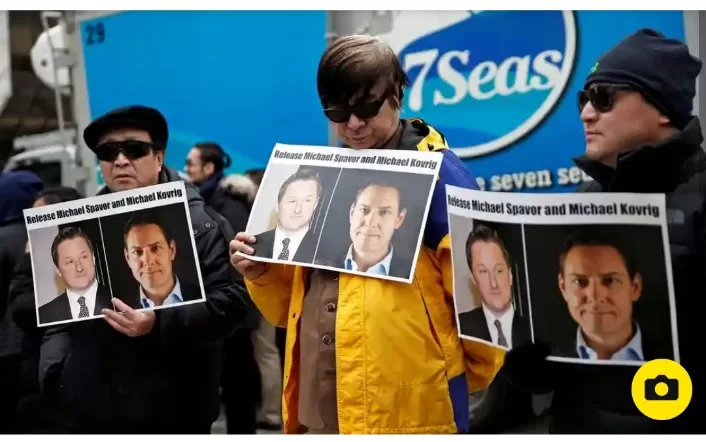
A renewed diplomatic dispute has erupted over allegations of “unwitting” espionage, as Michael Spavor, one of the Canadian citizens detained by China, claims he unknowingly passed intelligence to fellow detainee Michael Kovrig. The revelation has reignited tensions surrounding their arrests in 2018, widely criticized as “hostage diplomacy.”
Spavor, who is seeking a multi-million dollar settlement from the Canadian government, contends that he inadvertently provided intelligence on North Korea to Kovrig. The two Canadians were arrested shortly after the detention of Huawei executive Meng Wanzhou in Canada, contributing to a diplomatic standoff.
Spavor’s espionage claims have drawn mixed reactions, with China’s embassy in Ottawa reiterating allegations of the detainees’ involvement in activities endangering China’s national security. The embassy accused Canada of hypocrisy, stating that recent reports confirmed the men’s suspected crimes.
In response, Canada has vehemently denied the allegations, labeling the detention of the two men as “unjust and unacceptable.” The global affairs department emphasized that the trials did not meet minimum standards under international law.
Central to the allegations is Kovrig’s association with Canada’s global security reporting program (GSRP), generating diplomatic reports on security issues. Former ambassador Kerry Buck dismissed Spavor’s claims as “ridiculous,” asserting that GSRP diplomats produce reports read within government departments, including the Canadian Security Intelligence Service (CSIS).
However, experts like Stephanie Carvin argue that despite the denial of Kovrig working as a spy, he was involved in collecting intelligence. Carvin emphasizes the need for Canada to address how such intelligence work is perceived globally.
While acknowledging China’s arbitrary detention of the Canadians, Carvin highlights the ambiguity in Canada’s stance on foreign human intelligence agencies. She underscores the potential risks for officers like Kovrig, noting the uncertainty arising from Canada’s indecision in establishing a foreign human intelligence agency.
The ongoing diplomatic tensions underscore the complexities of intelligence gathering, with open-source intelligence gaining prominence in global discussions. Despite the denial of espionage, the espionage claims by Spavor have rekindled debates on the evolving nature of intelligence work in a rapidly changing geopolitical landscape.