


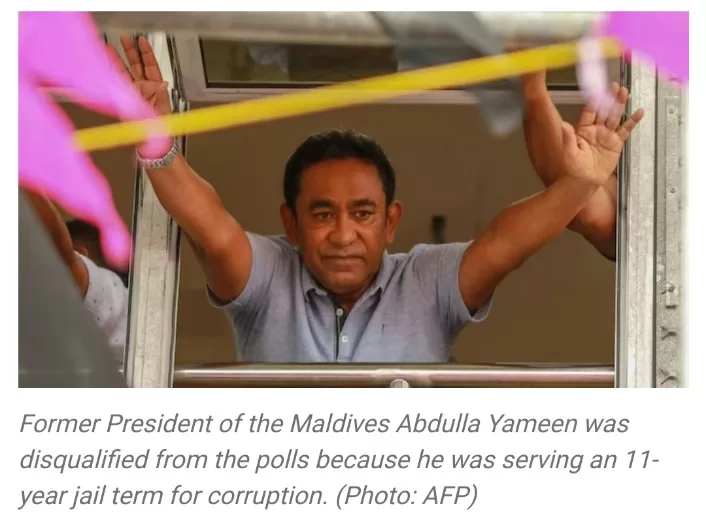
Malé, Maldives, Just days after the swearing-in of President Mohamed Muizzu, former Maldivian President Abdulla Yameen has announced the formation of a new political party. Yameen’s decision to split from his successor’s ruling Progressive Party of Maldives (PPM) poses a significant challenge for President Muizzu ahead of the parliamentary elections.
The Maldives, renowned as a high-end tourist destination, has recently become a geopolitical hotspot due to its strategic location along global shipping routes. President Muizzu assumed office last week after elections, serving as a proxy for pro-China former President Yameen, who was disqualified due to a corruption conviction.
Yameen’s loyalists accuse President Muizzu of attempting to seize control of PPM, leading to Yameen’s decision to form a new political entity. With parliamentary elections scheduled for the next year, this move adds a layer of uncertainty to Muizzu’s legislative agenda.
The Maldives’ position in the Indian Ocean makes its internal political dynamics of interest to regional and global players. President Muizzu’s election pledge to evict Indian troops has added complexity to the geopolitical landscape.
During his presidency, Yameen cultivated strong ties with China for financial and diplomatic support. The rift within PPM and Yameen’s new political venture may influence the Maldives’ foreign policy stance.
Winning a majority in the upcoming parliamentary elections is crucial for Muizzu to implement his legislative agenda. The internal political divide and Yameen’s influence could impact the electoral landscape.
The emergence of Yameen’s new political party intensifies the political landscape in the Maldives, raising questions about its domestic stability and external relationships. As the nation navigates these challenges, the upcoming parliamentary elections will serve as a crucial indicator of its political direction.
By AFP