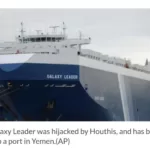



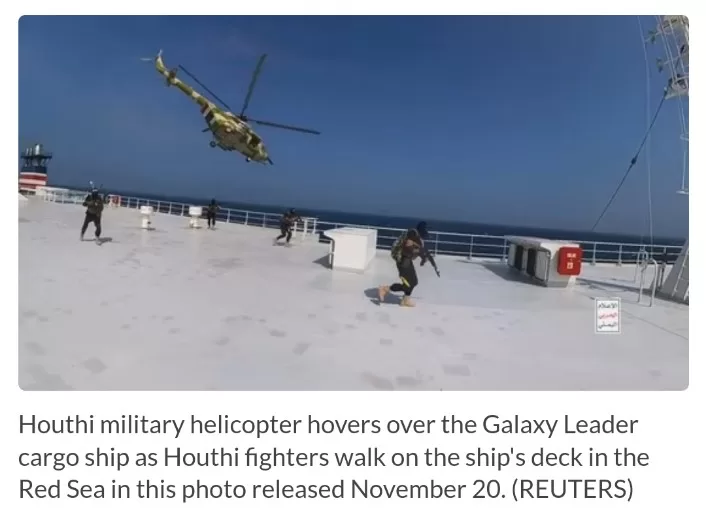
In a recent development that has sent shockwaves through diplomatic circles, Houthi militants based in Yemen released a video on Monday asserting their involvement in the hijacking of a cargo ship in the Red Sea. Initially reported as Israeli-linked, the vessel was later identified as British-owned and Japanese-operated by Israel. This incident, labeled by Israel as an “Iranian act of terrorism,” has escalated tensions in the region.
The video, disseminated by the Houthis’ TV channel Al Masirah, captures a daring operation where armed men descended from a military helicopter onto the ship, later identified as the Bahamas-flagged Galaxy Leader. Israel, contesting the claim, contends that the ship is affiliated with an Israeli billionaire but is British-owned. The authenticity of the video remains unverified by independent sources.
The owner of the vessel, Galaxy Maritime Ltd, based in the Isle of Man, released a statement on Monday asserting that the ship was “illegally boarded by military personnel via a helicopter” on November 19. The current location of the ship is reported to be in the Hodeidah port area in Yemen, and all communication with the vessel has been lost.
The United States swiftly condemned the seizure as a “flagrant violation of international law” and called for the immediate release of the ship and its crew. The crew, consisting of nationals from Bulgaria, Ukraine, the Philippines, Mexico, and Romania, is currently being held by the hijackers.
The Houthis, who are backed by Iran, claim that the ship was targeted due to its connection to Israel. They announced their intent to continue targeting ships in international waters linked to or owned by Israelis until the conclusion of Israel’s campaign against Gaza’s Hamas rulers. This statement has raised concerns about the safety and security of maritime trade in the region.
The international community is closely monitoring the situation, with diplomatic efforts underway to address the escalating tensions. The repercussions of this maritime incident are expected to have far-reaching implications for regional stability and trade.