



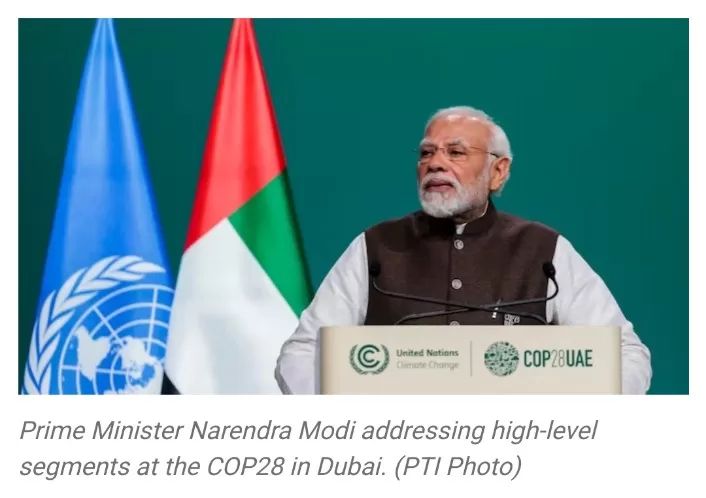
Dubai, In the recently released Climate Change Performance Index, India has ascended to the 7th spot, marking a positive shift from the previous report. The index, unveiled during the COP28 global climate talks in Dubai, highlights India’s high performance in Greenhouse Gas Emissions and Energy Use but notes a medium ranking in Climate Policy and Renewable Energy.
Despite being the most populous nation globally, India maintains relatively low per capita emissions, aligning with the benchmark of staying below a 2-degree Celsius rise. However, the report emphasizes a gradual pace in the adoption of renewable energy.
While acknowledging India’s efforts to meet its Nationally Determined Contributions (NDCs) with long-term policies favoring renewable energy, the report points out a continued reliance on coal, oil, and gas to meet the country’s growing energy demands, contributing significantly to greenhouse gas emissions and urban air pollution.
The report highlights India’s attempt to redefine fossil fuel strategies by changing the wording from ‘phase out’ to ‘phase down’ at the previous COP, signaling a setback in global commitments to end the fossil fuel era. It also raises concerns about the impact of large-scale renewable energy projects on local communities, citing land grabs and unequal distribution.
Experts urge a faster coal phase-out, reduced gas dependence, and an accelerated shift towards renewable energy. They emphasize the need for transformative adaptation, disaster risk management, and ecosystem-based solutions with a focus on equity.
Critically, the report questions the ambition and political will behind Prime Minister Narendra Modi’s announcement at COP26 about achieving net-zero emissions by 2070, calling for a more bottom-up approach that addresses the demands of tribal and rural communities.
Srinivas Krishnaswamy, CEO of Vasudha Foundation, applauds India’s high ranking but urges faster progress in climate action, emphasizing the importance of affordable, accessible, and culturally sensitive sustainable infrastructure.