



Once the cradle of ancient civilization and learning, Bihar today stands as a grim example of how populist politics can hollow out a state’s future.
Instead of creating jobs, improving schools, or modernizing infrastructure, the Nitish Kumar–BJP–JDU regimehas resorted to a pre-election spectacle of cash handouts and subsidies—a governance model built on dependency, not development.
Just before the polls, the government distributed ₹10,000 to women under welfare banners that many opposition leaders and activists rightly call “official vote-buying”.
Add to that the 125-unit monthly domestic electricity bill waiver and Bihar’s fragile state finances and power sector have been pushed even closer to collapse.
These measures don’t empower citizens—they bribe poverty instead of eradicating it.
The Reality: A State Running on Exodus
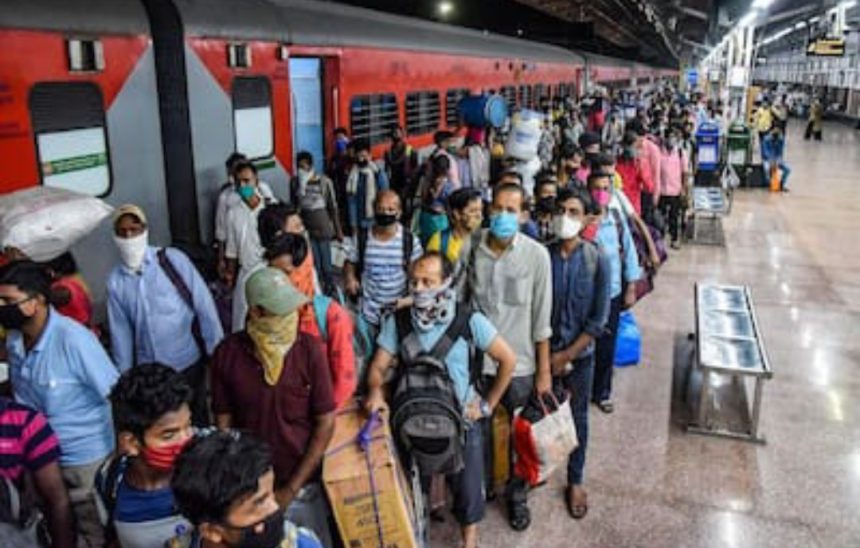
According to the Bihar Socio-Economic Caste Survey, nearly 75 lakh migrant labourers from Bihar work in southern and western Indian states—often in the most precarious, underpaid, and exploitative conditions.
They are low-skilled, low-productivity workers, trapped in a cycle of menial jobs and economic vulnerability.
Why? Because the state has done almost nothing to skill its youth for 21st-century industries—technology, green energy, digital services, logistics, manufacturing.
Instead of nurturing human capital, the leadership feeds short-term populism, leaving millions of families dependent on remittances and political patronage.
The result:
Bihar’s per capita income remains the lowest in India, less than half the national average.
It continues to be India’s poorest state, not because of lack of talent, but because of lack of political will.
Europe’s Contrast: Policy Over Populism
While Bihar doles out freebies before every election, European nations focus on productivity, innovation, and human capital.
In Germany, the state funds vocational training and apprenticeships, ensuring a steady supply of skilled workers.
In Denmark and Finland, welfare is linked to education and upskilling, not one-time cash transfers.
In the Netherlands, electricity subsidies are tied to green energy transitions, not blind vote-bank politics.
European politics is about policy performance, not populist performances.
Bihar, by contrast, is governed through a cycle of handouts, hollow slogans, and headline management.
The Real Cost of Political Short-Sightedness
Every rupee spent on these schemes is a rupee diverted from building schools, hospitals, and industrial clusters.
Every free electricity unit widens the fiscal hole while state universities crumble and youth migrate.
This isn’t a welfare state—it’s a vote factory sustained by state-funded dependency.
A state that once gave India Chanakya, Aryabhata, and Nalanda now produces migrant labourers, not innovators—the cruelest indictment of all.
The Way Forward: From Populism to Productivity
1. End the Freebie Culture
Mandate fiscal and electoral transparency for all pre-election announcements.
Conduct economic impact audits for all welfare schemes before approval.
2. Invest in Skills and Education
Build 21st-century skill universities in partnership with industry.
Reform school and university systems with merit-based recruitment, English proficiency, and digital literacy programs.
3. Create Real Jobs
Develop industrial corridors and logistics hubs to absorb local labour.
Promote MSMEs, agro-based industries, and tech parks to retain talent.
4. Reform Power and Infrastructure
Replace blanket electricity waivers with targeted subsidies for the poorest.
Invest in grid efficiency, renewable energy, and smart metering.
5. Strengthen Governance and Accountability
Introduce public dashboards for expenditure and project tracking.
Empower civil society and independent media to monitor schemes.
Conclusion: The Politics of Dependency Must End.
Bihar’s tragedy isn’t poverty—it’s political paralysis.
Instead of leading India’s next growth story, it remains trapped in a cycle of migration, mediocrity, and manipulated welfare.
Europe built prosperity through institutions, education, and accountability.
Bihar’s rulers chase headlines and handouts.
Until governance replaces gimmicks, and voters demand progress over populism, Bihar will remain poor not by fate, but by political design.