



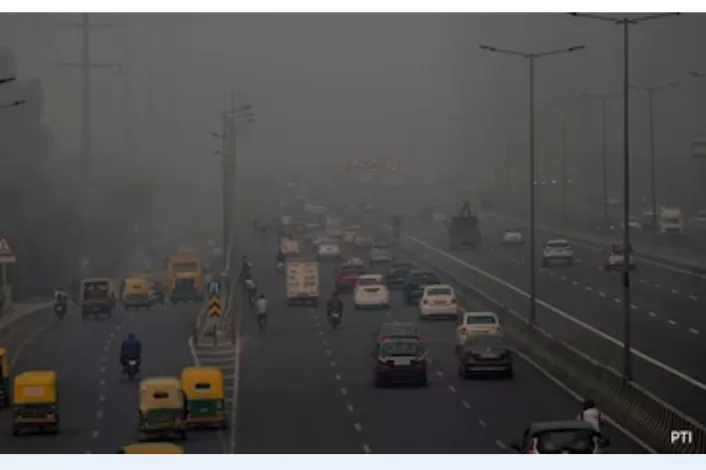
New Delhi – As air quality in Delhi remains entrenched in the severe category for multiple consecutive days, a thick and toxic smog blankets the entire city, resulting in poor visibility and health concerns. Scientists have raised alarm over the anticipated surge in pollution levels in Delhi-NCR over the next fortnight, with the Air Quality Index (AQI) in various areas already breaching the 400-mark. Many individuals are grappling with respiratory issues, and health experts have elaborated on the detrimental effects of air pollution on human health. In an effort to combat this crisis, the government has barred the entry of trucks into Delhi, except those transporting essential goods, providing vital services, or running on cleaner fuels such as LNG, CNG, or electricity.
Simultaneously, the Central government has activated the Graded Response Action Plan (GRAP) at its most stringent level in Delhi and surrounding areas, implementing an array of anti-pollution measures to confront the deteriorating air quality. However, a new research study conducted by the University of British Columbia and the University of Victoria adds another layer to the air pollution conundrum: the impairment of brain function due to even moderate traffic pollution, within just two hours of exposure.
The findings of this study, published in the Environmental Health journal, provide empirical evidence of altered brain network connectivity as a direct consequence of air pollution, elucidated through a meticulously monitored experiment.
For this research, twenty-five healthy adults were subjected to brief exposures to filtered air and diesel exhaust at varying intervals in a controlled laboratory setting. The study involved pre- and post-exposure monitoring of brain activity through functional magnetic resonance imaging.
Senior study author Dr. Chris Carlsten stated, “For many decades, scientists believed that the brain was shielded from the adverse effects of air pollution. This study, the first of its kind globally, provides fresh evidence supporting a connection between air pollution and cognition.”
The research focused on the default mode network (DMN), an interconnected brain region activated during internal mental functions, including memory recall. Subsequent to exposure to diesel exhaust, the study revealed a decline in functional connectivity within the DMN, as analyzed through brain scans.
Dr. Jodie Gawryluk added, “Altered functional connectivity within the DMN has been associated with reduced cognitive performance and symptoms of depression. Thus, it is disconcerting to observe traffic pollution interrupting these critical brain networks. Although further research is necessary to fully comprehend the functional ramifications of these changes, they may potentially impair cognitive abilities and work performance.”
It is worth noting that the changes observed in the brain were temporary, and brain connectivity returned to its normal state following the exposure. However, the researchers suggest that prolonged exposure may yield long-lasting effects.
Dr. Chris Carlsten, the senior study author and Head of Respiratory Medicine at the University of British Columbia, advised, “Individuals may want to reconsider keeping their windows down while stuck in traffic. It is imperative to ensure that your car’s air filter is in optimal condition, and for those walking or biking on busy streets, considering alternate routes with less traffic is advisable.” Dr. Carlsten further emphasized that air pollution represents the “most significant environmental threat to human health” and predicted that similar impacts on the brain might emerge from exposure to other pollutants like forest fire smoke.
This research sheds new light on the far-reaching consequences of air pollution, highlighting the need for robust measures to address the ongoing air quality crisis in Delhi and beyond.