


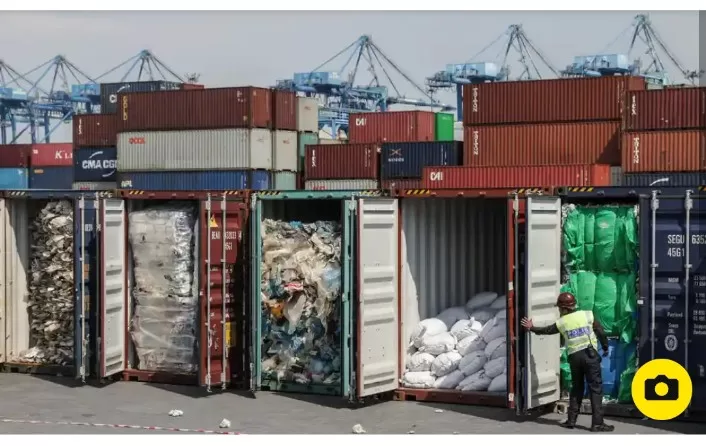
BRUSSELS – European Union authorities have reached a pivotal accord to cease the export of waste plastic to ports in less affluent countries. In a collaborative effort between European lawmakers and member states, an agreement was secured on Friday, marking a critical move to curb the transference of plastic refuse to nations beyond the OECD group, primarily consisting of economically developed countries. The embargo is anticipated to be enforced from mid-2026.
Pernille Weiss, a Danish member of the European Parliament, spearheading the proposal, stated, “The EU will finally assume responsibility for its plastic waste by banning its export to non-OECD countries.” She emphasized the EU’s commitment to treating waste as a valuable resource, provided it does not compromise the environment or human health.
The proposed regulations, subject to formal approval by the European Council and Parliament, introduce stringent controls on plastic waste exports to affluent countries and a complete prohibition on exports to non-OECD nations. After a five-year period, countries seeking to import EU plastic waste may request a ban lift, contingent on demonstrating responsible waste management practices.
While a significant proportion of discarded plastic in Europe is incinerated, with less than a third being recycled, concerns have been raised about the mismanagement of plastic waste shipped abroad for recycling, ending up in landfills and water bodies.
Lauren Weir, a campaigner from the Environmental Investigation Agency, acknowledged the progress but emphasized the necessity for a comprehensive plastic waste ban. She noted, “This is a signal that the EU is finally beginning to take responsibility for its role in the global plastic pollution emergency.”
The regulations permit the shipment of certain non-plastic waste to non-OECD countries if they meet specified social and environmental criteria. However, this may result in a potential surge in waste exports to OECD countries such as Turkey.
Sedat Gündoğdu, a microplastics researcher at Çukurova University in Turkey, expressed disappointment regarding the absence of a total ban on shipments to Turkey, the largest importer of plastic waste in the EU and an OECD member. He highlighted concerns about partial bans and ineffective content controls, citing past practices that failed to prevent the illegal circulation of plastic waste.