



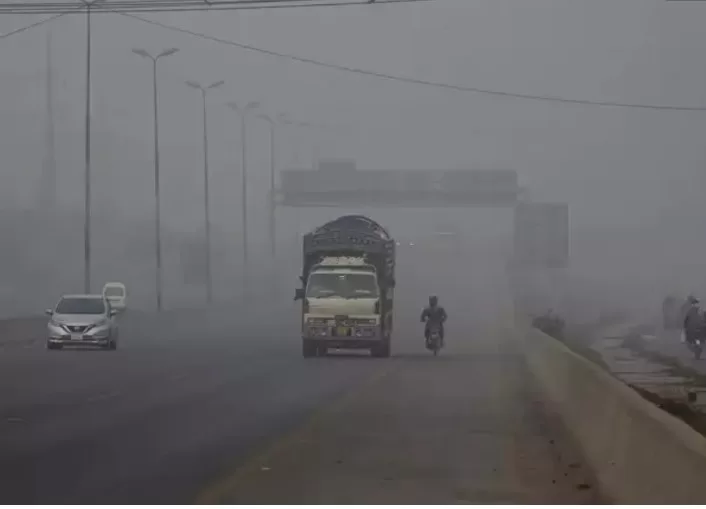
Lahore, Pakistan’s second-most populous city, grapples with an unprecedented shutdown precipitated by the pernicious onslaught of toxic air pollution. Schools, public parks, and offices stand shuttered as a consequence of the air quality index (AQI) surging beyond 400, a perilous threshold delineated by the Swiss air tracking company IQAir. In response, Chief Minister Mohsin Naqvi has invoked an “environmental and health emergency” across Gujranwala, Hafizabad, and Lahore until a remedial upswing is observed.
The governance mandate imposes constraints on the movement of individuals to and from these afflicted areas, both by public and private modes of transportation. Further, Naqvi’s administration has instituted a prohibition on gatherings exceeding four individuals in a singular location, a measure aimed at mitigating the potential spread of health hazards.
The exacerbation of pollution levels finds its roots in a convergence of factors. Colder temperatures have confined pollution particles, giving rise to a toxic haze that reaches hazardous dimensions. A confluence of traditional practices, including the incineration of leftover rice stubble by millions of farmers after the winter harvest, compounded by vehicular and industrial pollution, has birthed copious amounts of smog.
As reported by CNN, the concentration of PM 2.5, indicating minuscule particulate matter, surpassed 450 in Lahore, a figure astronomically exceeding the World Health Organization’s recommended maximum average daily exposure. This alarming level is unequivocally deemed hazardous to public health, underscoring the severity of the air quality crisis.
In a glimmer of relief for the beleaguered residents of Lahore, rain showers on Friday precipitated a considerable reduction in air pollution levels, offering a temporary respite from the oppressive environmental conditions. This multi-faceted crisis underscores the imperative for comprehensive measures to address the intersections of agricultural, vehicular, and industrial contributors to air pollution, ensuring a sustainable and healthier future for Lahore and regions grappling with similar challenges globally.