



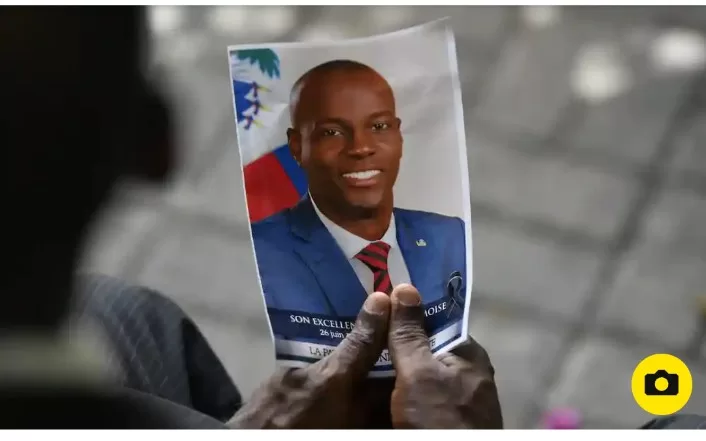
In a groundbreaking development, a retired Colombian army officer has been condemned to a life sentence for his complicity in the assassination of Haitian President Jovenel Moïse in 2021, an event that plunged Haiti into unprecedented chaos.
Germán Alejandro Rivera García, aged 45, is the second among the 11 suspects apprehended and charged in Miami, implicated in what U.S. prosecutors have described as a plot originating both in Haiti and Florida, where mercenaries were recruited to either abduct or assassinate Moïse. The Haitian President was killed at his private residence near Port-au-Prince on July 7, 2021.
Rivera, also known as Colonel Mike, had previously confessed in September to conspiring and aiding a scheme to eliminate the Haitian president. Court documents indicate that he was part of a convoy en route to Moïse’s residence on the day of the assassination. He had conveyed information that the plan was not to abduct but to assassinate the president.
Rivera, who had faced the possibility of a life imprisonment sentence, had hoped for a reduced penalty after entering into a cooperation agreement with U.S. authorities.
Federal Judge José E. Martínez delivered the sentence in Miami during a hearing that lasted less than 30 minutes, underscoring the gravity of the case.
This verdict follows the life imprisonment of Haitian-Chilean businessman Rodolphe Jaar in June, who was also involved in Moïse’s killing. Former Haitian Senator John Joel Joseph is scheduled for sentencing in December, while eight additional defendants are awaiting trial in the United States next year.
Rivera appeared at the hearing donned in the attire of a prisoner, dressed in a beige shirt and pants, with his hands restrained and ankles shackled as he attentively listened to the judge’s ruling, seated alongside his attorney.
The charges indicate that Rivera, along with Jaar, Joseph, and other individuals, including approximately 20 Colombian nationals and several Haitian-American dual citizens, played a part in the conspiracy. Initially planning to abduct Moïse, they later changed their intention to assassinate him. Investigators suggest that the conspirators aspired to secure lucrative contracts under a successor to Moïse.
The tragic assassination took place after assailants forcibly entered Moïse’s residence when he was 53 years old.
More than 40 suspects connected to the case remain incarcerated in Haiti, over two years after the assassination. This situation has persisted as the most recent investigative judge continues to interrogate those involved. Among the arrested individuals were 18 former Colombian soldiers.
Notably, the case witnessed a significant development when Joseph Félix Badio, a key suspect who had previously served in Haiti’s Ministry of Justice and the government’s anti-corruption unit, was apprehended in Port-au-Prince after being on the run for over two years.
In the aftermath of the assassination, Haiti witnessed a surge in gang violence, compelling the Prime Minister to request the deployment of an international armed force. In early October, the United Nations Security Council voted to dispatch a multinational force led by Kenya to combat these gangs, although Kenya has not yet announced a deployment date.