



In a significant diplomatic development, Saudi Arabia and the United Arab Emirates, alongside seven other nations, thwarted a proposal during the Islamic-Arab summit to completely sever diplomatic and economic ties with Israel. The proposal also suggested denying Arab airspace to Israeli flights and leveraging oil as a means to facilitate a ceasefire in Gaza.
Notable opposition to the proposal came from Saudi Arabia, the UAE, Jordan, Egypt, Bahrain, Sudan, Morocco, Mauritania, and Djibouti. The move raises questions about the collective stance of these nations amid the ongoing Israel-Hamas conflict.
While the official communique from the summit did not explicitly mention the proposal, delegates revealed that Algeria had introduced the idea. However, it faced resistance from other Arab nations, emphasizing the need to maintain open channels of communication with Israel amidst the escalating crisis.
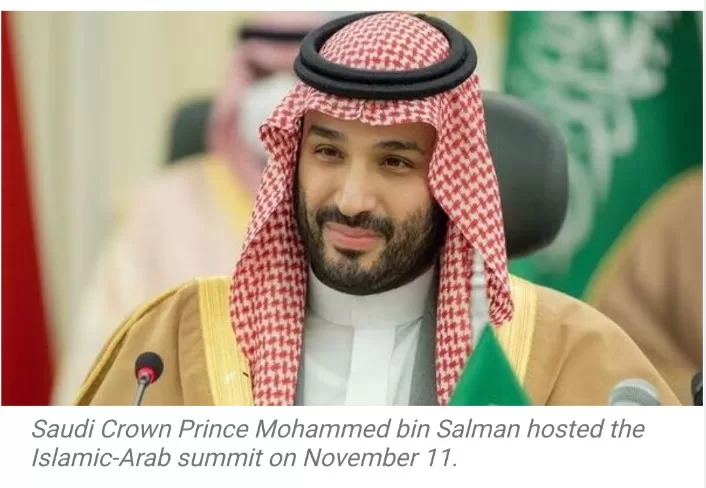
The summit, hosted by Saudi Crown Prince Mohammed bin Salman, marked a historic moment with the first visit of an Iranian head of state to Saudi Arabia. Iranian President Ebrahim Raisi urged Islamic countries to designate the Israeli military as a “terrorist organization.” Turkish President Recep Tayyip Erdogan called for an international peace conference to address the Israel-Palestine conflict.
The diplomatic dynamics in the region are evolving, and this move adds complexity to the ongoing efforts to address the humanitarian crisis in Gaza.