


Residents in south-west Iceland are in a state of heightened alert as the specter of a potential volcanic eruption looms beneath the Reykjanes peninsula. Civil protection authorities, grappling with the looming danger, suggest that even in the absence of an eruption, it could be several months before evacuated residents from the perilous zone around the fishing town of Grindavik can safely return to their homes.
The evacuation of Grindavik occurred a week ago when seismic activity, marked by thousands of earthquakes, indicated the movement of magma beneath the earth’s surface. This geological unrest has left a conspicuous crack traversing the town, causing the ground to upheave by 1 meter (3 feet) or more in certain locations.
The Icelandic meteorological office emphasizes a “significant likelihood” of an eruption within the 9-mile (15km) magma tunnel, identifying an area north of Grindavik, near the Hagafell mountain, as a “prime location.”
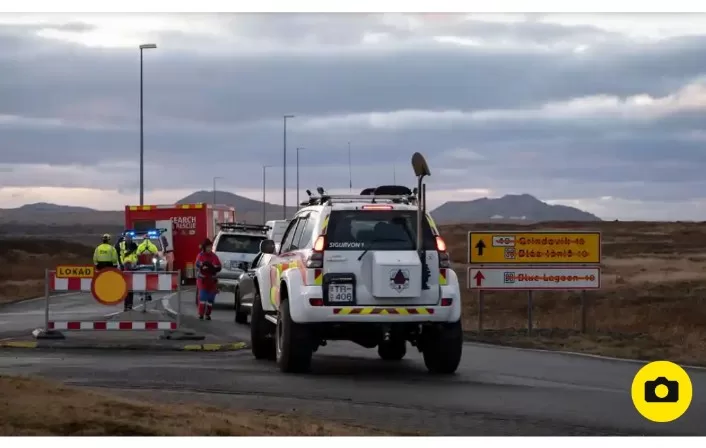
Grindavik, home to a population of 3,400, rests on the Reykjanes peninsula, approximately 31 miles southwest of Reykjavik, in proximity to Keflavik airport—the primary international flight hub for Iceland. The renowned Blue Lagoon geothermal resort, a major tourist attraction, has been temporarily shuttered due to the volcanic threat until at least the end of November.
Residents of Grindavik have been granted brief, five-minute intervals to return to the town, enabling them to rescue essential possessions and pets amid the ongoing uncertainty.
The Reykjanes peninsula’s volcanic system has witnessed eruptions thrice since 2021, breaking an 800-year dormancy. Previous eruptions unfolded in remote valleys without causing substantial damage.
Iceland, perched atop a volcanic hotspot in the North Atlantic, experiences eruptions at an average rate of every four to five years. The most disruptive in recent memory was the 2010 eruption of the Eyjafjallajökull volcano, generating massive ash clouds that paralyzed air travel across Europe for days.
While scientists anticipate that a new eruption would likely yield lava rather than an ash cloud, the situation remains precarious, emphasizing the inherent geological volatility of Iceland’s landscape.
by AP