


In a democracy as vast and vibrant as India, three pillars are expected to work as guardians of public interest — Parliament, the media, and political parties. Each has a constitutional or moral duty to strengthen democracy, ensure accountability, and protect citizens’ trust. Yet, the collective output of these institutions today raises an uncomfortable question: Have they become part of the problem rather than the solution?
1. Parliament: The Silent Chamber of Noise
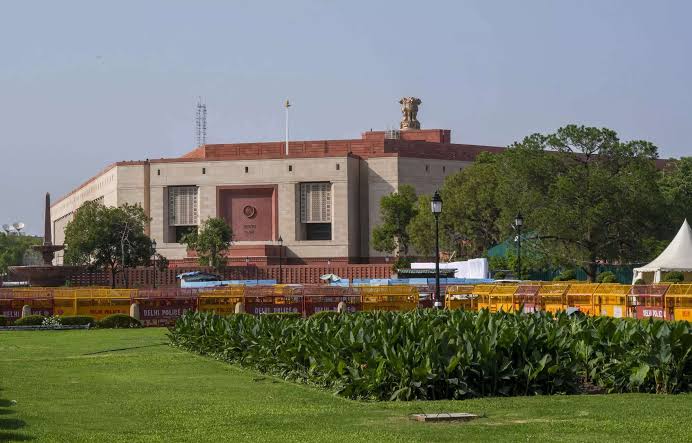
India’s Parliament was once known for fierce yet intellectual debate — where arguments mattered more than theatrics. Today, however, the image is one of shouting matches, walkouts, and adjournments.
According to data from PRS Legislative Research, the productivity of Parliament sessions has fallen sharply over the past decade. Important bills are **rushed through without discussion**, and Opposition parties are often denied the floor. On the other hand, ruling parties treat Parliament as a rubber stamp.
When the highest democratic institution stops functioning as a space for deliberation, governance suffers. The public sees laws made without consent, and democracy begins to look like a performance rather than participation.
Verdict: Low productivity, high political theatre, poor public service.
2. Media: From Watchdog to Lapdog
If Parliament reflects democracy’s voice, the media was supposed to be its eyes and ears. The Fourth Estate once held governments accountable and questioned power. Today, however, both print and electronic media are deeply polarized — split between blind loyalty and performative outrage.
Many prime-time debates have become shouting contests, where facts drown in noise and anchors play judge and jury. Investigative journalism is shrinking; sensationalism sells better than truth. The result? The public is misinformed, easily manipulated, and politically divided.
Independent journalism survives, but only on the margins — in small digital outlets or among a few brave voices.
Verdict: High visibility, low credibility. The messenger has become the message.
3. Political Parties: Regional and National, Divided by Power, United in Self-Interest
At both national and regional levels, political parties now treat elections not as a public mandate but as a marketplace of loyalty. Candidates are chosen not for merit but for caste, money, or muscle.
Ideological differences are fading; opportunism rules. The regional parties, once seen as voices of local aspirations, now mirror the same dynastic and corrupt tendencies as national ones.
Policy debates have been replaced by personality cults. Parties focus on winning elections, not governing after victory. Welfare schemes are weaponized as political tools, and long-term reform gets buried under short-term populism.
Verdict: High energy in campaigning, low commitment in governing.
4. The Collective Consequence
When Parliament fails to deliberate, the media fails to inform, and political parties fail to reform, democracy loses its moral compass. The combined failure of these institutions has led to a crisis of credibility — citizens no longer know whom to trust.
The irony is that India’s democracy is both too noisy and too hollow: loud in rhetoric, empty in results.
5. The Way Forward
Reviving India’s democratic spirit requires introspection and reform in all three spaces:
Parliament must restore debate and accountability through mandatory discussion time and bipartisan committees.
Media needs stronger regulation against fake news and corporate control, while protecting press freedom.
Political parties must democratize internally — allowing merit, not dynasty, to lead.
India’s institutions are not beyond repair — but they must remember why they exist: to serve the people, not power.
The health of a democracy is not measured by how often elections are held, but by how responsibly its institutions perform between them. Unless Parliament debates, the media questions, and parties reform, India will continue to have democracy in form but not in spirit.