



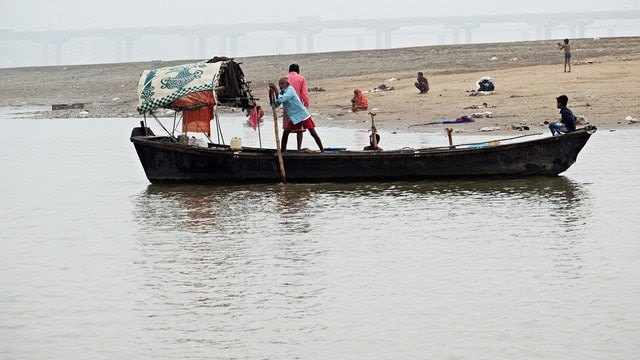
Patna, In an unprecedented development for the post-monsoon season, several districts in Bihar are experiencing significant riverbank erosion along the Ganga, Bagmati and Mahananda rivers during November, a period traditionally considered outside the flood and erosion cycle.
Engineers and local administrators have expressed surprise at the timing. Erosion along these rivers has historically been confined to the monsoon months of Sawan and Bhado (July–September). This year, however, aggressive bank cutting has continued well into Agahan, forcing residents to evacuate homes and swallowing agricultural land long after the official flood season ended two months ago.
In Bhagalpur, more than 100 feet of land at Manik Sarkar Ghat has been lost to the Ganga in recent days, prompting the district administration to deploy geo-bags to stabilise the bank. Similar incidents have been reported in Munger’s Kutulpur and Jafarnagar areas, where several houses have already collapsed into the river and at least 15 more remain at immediate risk. In Khagaria district, villages such as Mathar, Barkhandi Tola, English Tola, Ekania and Sonvarsa are under threat, while in Katihar’s Manihari-Kheria area, previous anti-erosion measures using crated boulder aprons and geo-bag slope pitching have proved ineffective.
River experts attribute the phenomenon to a combination of heavy siltation and obstruction of natural flow paths. Brajbhushan Jha, a noted fluvial geomorphologist, told local media that excessive sediment load, coupled with the proliferation of bridges and culverts, is forcing rivers to revert to older channels. “When the natural braided flow is constricted, the river seeks its historical course, resulting in sudden and severe erosion on the new banks,” he said.
Aditya Prakash, Executive Engineer at the Water Resources Department, declined to speculate on the precise causes, stating only that district authorities have requested specialist teams from headquarters to assess the situation.
The episodes highlight longer-term challenges for flood and erosion management in Bihar, where infrastructure development and sediment dynamics are increasingly altering river behaviour. With climate patterns showing greater variability and silt loads remaining high, the state may face a longer active erosion season than historical records suggest.
Local administrations have stepped up emergency works, but residents in affected areas remain on high alert as the rivers continue to reshape the landscape in what was once regarded as the dry winter months.