



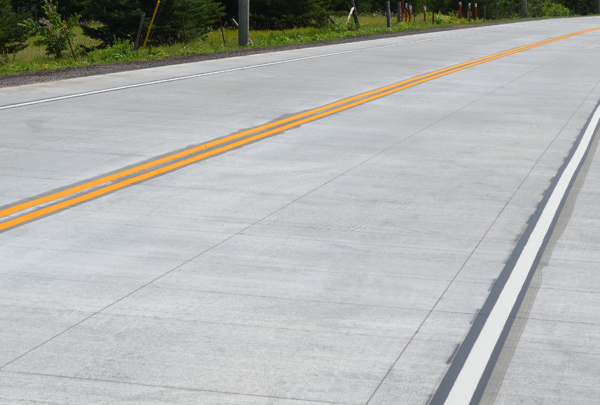
Thousands of farmers in Bihar’s Munger district are preparing for renewed protests against the National Highways Authority of India (NHAI) over the absence of service roads or underpasses along a 4-km stretch of the under-construction Mirza Chauki four-lane highway between Kantpur and Mahamada-Paatam.
The project, part of the broader upgrading of NH-74, has effectively severed direct access to several thousand hectares of fertile agricultural land used predominantly for rabi crops such as tomato, cabbage, cauliflower and radish. Farmers whose fields lie as little as 200 metres from the existing alignment now face detours of 2–3 km once the elevated carriageway is commissioned.
“After the road is opened to traffic, reaching our fields will become practically impossible without designated crossings,” said Ram Bahadur Chaudhary, a farmer from Gadhirampur village. Several affected cultivators, including Rajesh Chaudhary, Sohan Chaudhary and Dinesh Chandra Jha, have launched a signature campaign and plan to form a formal committee to press their demands.
The farmers cite Section 94 of the Right to Fair Compensation and Transparency in Land Acquisition, Rehabilitation and Resettlement Act, 2013 (RFCTLARR Act), which explicitly mandates the provision of “reasonable access” to agricultural land severed by linear infrastructure projects. They accuse the NHAI of flouting the statutory requirement.
Local NHAI project director Manish Kumar defended the design, stating that the carriageway height of 3–4 feet in the Gadhirampur-Kantpur section already allows farmers to cross beneath it at present. “Providing multiple access points along the entire stretch is technically unfeasible,” Mr Kumar said, adding that farmers can use the route via the new Ramnagar police station once the highway is operational.
Previous demonstrations and dharnas on the issue have yielded no tangible results, farmers claim, prompting warnings of escalated agitation if at least two or three dedicated crossings are not constructed immediately between Kantpur and Paatam.
The standoff highlights a recurring tension in India’s ambitious highway expansion programme: balancing rapid infrastructure delivery with the livelihood concerns of rural communities whose land is acquired or bisected. With the four-laning works nearing completion, time appears to be running out for an amicable resolution acceptable to both the highway authority and the affected agrarian population.