



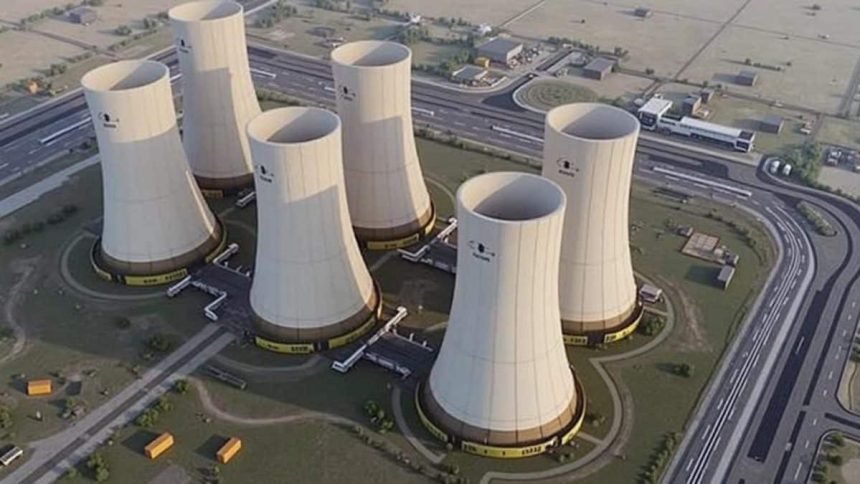
Patna, In a significant move to address Bihar’s growing electricity needs and support industrialisation, the state is set to more than double the capacity of the Chausa thermal power project in Buxar district while advancing plans for a new dedicated plant in Aurangabad.
Satluj Jal Vidyut Nigam Limited (SJVN), the public-sector undertaking developing the existing 1,320 MW Chausa project, has submitted a proposal to the Union Ministry of Power for a 1,600 MW extension at the same site. The Stage-II expansion will comprise two 800 MW ultra-supercritical units, a technology that offers higher thermal efficiency, lower coal consumption and reduced emissions compared with conventional sub-critical plants.
Officials indicate that, upon clearance, construction could begin as early as the next financial year, with commissioning expected within four to five years. Critically, approximately 90 per cent of the additional output is earmarked for Bihar, providing the state with a secure, long-term source of baseload power at a time when peak demand is forecast to rise by more than 1,200 MW over the coming half-decade.
The expansion is seen as essential for the Nitish Kumar administration’s ambition to attract private investment. Reliable and affordable electricity remains a prerequisite for large-scale industrial projects, and Bihar has historically depended heavily on power purchases from other states, often at premium rates during periods of shortage.
Separately, the National Thermal Power Corporation (NTPC) and Indian Railways are finalising plans for a new 800 MW unit at Nawinagar in Aurangabad district, located roughly 8 km from NTPC’s existing Nabinagar complex. The plant will operate as a dedicated captive facility, with the entire output contracted to the railways under a long-term power-purchase agreement – a structure that guarantees revenue stability for the developers while securing cost-competitive supply for one of India’s largest electricity consumers.
Taken together, the two projects will add close to 2,400 MW of coal-based capacity exclusively or predominantly for Bihar and its strategic users, marking one of the most substantial additions to the state’s power infrastructure in recent years.
Although India has committed to ambitious renewable-energy targets and a phased reduction in coal dependence, policymakers continue to view modern, efficient thermal plants – particularly those employing ultra-supercritical technology – as indispensable for grid stability and industrial growth in states still grappling with chronic power deficits.
The accelerated pace of these developments reflects both the urgency of Bihar’s energy challenge and the central government’s willingness to back state-specific solutions within the broader framework of energy security.