



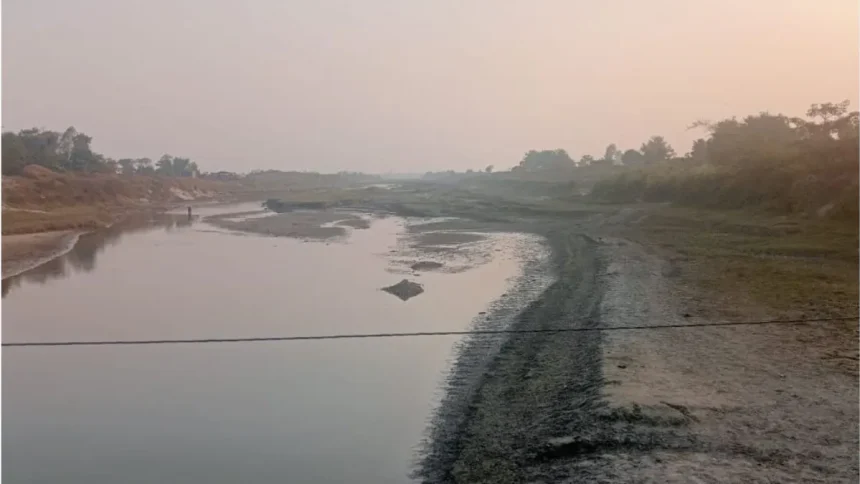
Patna, In a significant development for one of India’s most flood-prone regions, survey work has commenced on the ₹6,282-crore Kosi-Mechi Interlinking Project, offering renewed hope to farmers across the Seemanchal belt of Bihar.
The ambitious scheme, part of the Centre’s accelerated irrigation benefit programme under the Pradhan Mantri Krishi Sinchayee Yojana, aims to divert excess floodwater from the perennially swollen Kosi river into the Mechi river along the India-Nepal border. By doing so, it seeks simultaneously to mitigate devastating annual floods and bring reliable irrigation to 214,000 hectares of hitherto rain-fed farmland spread across Araria, Purnea, Kishanganj, Katihar, Khagaria, Madhepura and Supaul districts.
The 117.5 km canal link, first conceived decades ago and accorded national project status in 2019, has faced repeated delays over land acquisition, environmental clearances and inter-state coordination with Nepal. Tenders for the main works were finally completed earlier this year, and officials now confirm that detailed field surveys are under way.
“Survey work is in progress. Construction will begin immediately after its completion,” Anil Kumar, Chief Engineer of the Saharsa Irrigation Division, told local reporters.
A separate desilting operation along the heavily silted Bhenga channel, crucial for maintaining flow capacity, has also been initiated by Ritik Company and is scheduled for completion by the 31st reducing distance (31 RD) marker.
For the Kosi basin’s long-suffering residents, the project represents more than infrastructure. The river, notoriously nicknamed the “Sorrow of Bihar”, triggers catastrophic floods almost every monsoon, breaching embankments, erasing entire villages and destroying standing crops. By diverting surplus water eastward into the Mechi, the link is expected to reduce pressure on the existing Kosi barrage and embankments, substantially lowering flood risk both within and beyond the protected area.
At the same time, the canal will create a new irrigated command area, potentially transforming agricultural productivity in a region where farmers currently depend on erratic rainfall and limited groundwater.
The project carries a revised cost estimate of ₹6,282 crore and an official completion target of March 2029. While past deadlines have repeatedly slipped, the start of on-ground surveys has been welcomed as the clearest signal yet that Asia’s largest remaining river-interlinking scheme may finally be moving from drawing board to reality.
For Bihar’s farmers, few of whom have ever known a year without the twin threats of flood and drought, that prospect alone is reason for cautious optimism.