


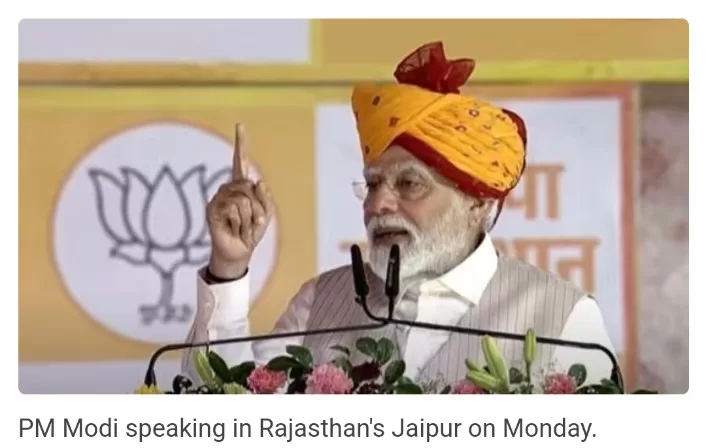
In a strategic move aimed at curbing nepotism and projecting a united front, the Bharatiya Janata Party (BJP) has unveiled its electoral blueprint for the upcoming state and national elections. This plan hinges on the principles of “collective leadership” and harnessing the enduring appeal of Prime Minister Narendra Modi.
Party insiders reveal that the BJP is deliberately avoiding the projection of specific chief ministerial candidates, especially in Hindi-speaking states like Madhya Pradesh and Rajasthan. This tactic is designed to prevent the emergence of rivalries among regional leaders and to emphasize the concept of the “party above individual.”
In essence, the BJP is banking on high-profile candidates to secure seats in traditionally weaker areas while relying on Prime Minister Modi’s charisma to secure electoral victories. Additionally, by keeping the chief ministerial position open, the party aims to motivate regional leaders to redouble their efforts.
Notably, the party’s objective extends beyond electoral victories; it seeks to counter allegations of “dynasty politics” often hurled by the opposition, a criticism Prime Minister Modi frequently levels at the Congress party. To achieve this, sources suggest that the BJP intends to limit ticket distribution to one per family.
This electoral strategy was partially revealed with the recent announcement of the BJP’s candidates in Madhya Pradesh. Notable inclusions featured four incumbent Members of Parliament, three Union Ministers, and the party’s National General Secretary, indicating a commitment to “collective leadership.” Notably absent from the list was Chief Minister Shivraj Singh Chouhan, fueling speculation about his future role.
While BJP insiders insist that rumors of Chouhan’s removal or denial of a ticket are unfounded, the ambiguity surrounding the post-election chief ministerial selection raises questions about the veteran leader’s political trajectory.
This approach will also be applied in Rajasthan and Chhattisgarh, where the BJP aims to unseat the Congress and in Telangana, where the party seeks to challenge Chief Minister K. Chandrashekhar Rao’s Bharat Rashtra Samithi.
In Rajasthan, potential chief ministerial candidates include Union Ministers Gajendra Singh Shekhawat and Arjun Ram Meghwal, while candidates may include prominent figures like Rajya Sabha MP Dr. Kirodi Lal Meena and Lok Sabha MPs Diya Kumar, Rajyavardhan Rathore, and Sukhveer Singh Jaunpuria.
Vasundhara Raje, a prominent BJP leader, and member of the Scindia royal family, is unlikely to make a return. The handling of Raje’s role will be pivotal, considering her influence beyond BJP’s traditional voter base.
Chhattisgarh takes a different path, with the BJP naming Chief Minister Bhupesh Baghel’s nephew, Vijay Baghel, as its candidate. This decision sets the stage for a “Baghel Vs Baghel” contest, capitalizing on family dynamics to gain an edge.
In Telangana, the BJP’s ‘Mission South’ initiative aims to establish a foothold in South India. Union Minister G. Kishan Reddy, Lok Sabha MPs Bandi Sanjay Kumar and Arvind Dharmapuri, and OBC Front leader and Rajya Sabha MP Dr. K. Laxman are among the potential candidates for the upcoming elections in the state.
Mizoram presents unique challenges due to the spillover effect of ethnic violence from neighboring Manipur.
The BJP’s multi-pronged strategy underscores the party’s commitment to adapt and thrive in diverse regional landscapes as it navigates the complexities of Indian politics.