



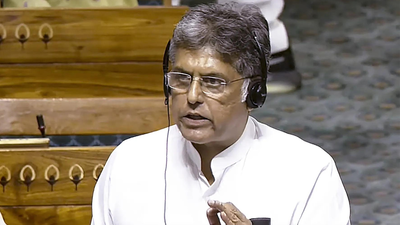
New Delhi ,Manish Tewari, a Congress parliamentarian from Chandigarh, on Friday introduced a private member’s bill in the Lok Sabha that would significantly restrict the scope of India’s anti-defection law, allowing lawmakers greater freedom to vote according to conscience on most legislative matters.
The proposed amendment to the Tenth Schedule of the Constitution – commonly known as the anti-defection law, enacted in 1985 – would limit automatic disqualification of MPs to instances where they defy their party’s whip only on motions that directly affect the stability of the government. These include confidence and no-confidence votes, adjournment motions, money bills, and other financial matters.
On all other legislation and motions, MPs would be free to vote independently without risking loss of their seat, a change Mr Tewari described as an attempt to end what he termed “whip-driven tyranny” and to foster more thoughtful law-making.
In a post on X accompanying a media report, Mr Tewari noted that this is the third time he has introduced the bill, having previously tabled identical measures in 2010 and 2021.
The bill also proposes procedural safeguards: the Speaker or Chairman would be required to announce in the House any whip issued on the restricted categories of votes and explicitly warn members that defiance would trigger automatic disqualification. Members facing disqualification would gain a statutory right of appeal to the presiding officer, to be decided within 60 days.
Speaking to the Press Trust of India, Mr Tewari confirmed the legislation’s twin objectives: removing the “tyranny of the whip” and encouraging better-quality legislation.
Private member’s bills rarely become law in India, where government business dominates parliamentary time, yet Mr Tewari’s proposal reopens a long-standing debate on intra-party democracy and the balance between collective responsibility and individual legislative judgment at a time when coalition governments and fragile majorities have made the anti-defection law a critical political tool.