



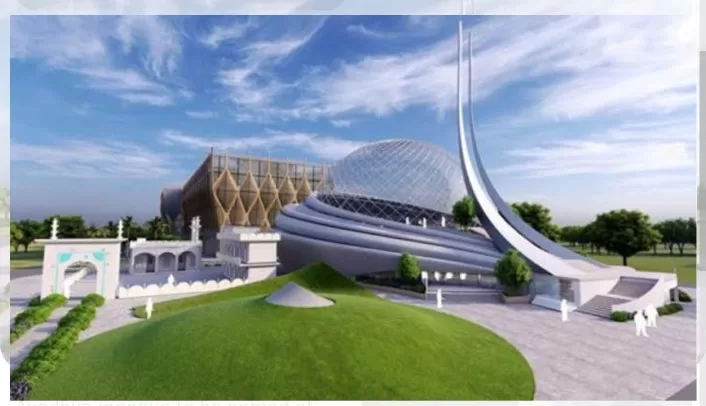
Ayodhya, The construction of the mosque mandated by the Supreme Court in the Ram Janmabhoomi-Babri Masjid case is scheduled to begin in May. The Indo-Islamic Cultural Foundation Trust, responsible for the project, plans to appoint in-charges in different states from February to facilitate fundraising.
Despite the impending consecration ceremony of the Ram temple on January 22, 2024, the mosque’s construction has yet to commence. Chief trustee Zufar Farooqui anticipates the final mosque design to be ready by mid-February, with construction potentially starting in May. The mosque’s unique features include an egg-shaped design without a dome, a two-storey structure without minarets, and solar power installations.
The delay in construction is attributed to design alterations and financial constraints. The trust is considering fundraising strategies, including the possibility of a crowdfunding campaign, with a decision expected by February.
The proposed mosque in Ayodhya, part of the Supreme Court’s resolution, is set to cover 40,000 square feet, deviating from the initial 15,000 square feet plan. The construction timeline is contingent on fund availability.
In addition to the mosque, the Indo-Islamic Cultural Foundation Trust plans to build a 200-bed hospital, a community kitchen, a modern library, and a museum on the allocated land. Talks have been held with a Mumbai-based group overseeing the construction committee. The land, provided by the government, is situated in Dhannipur, Ayodhya, following the Supreme Court’s directive.
The trust aims to ensure transparency and accountability in fundraising, exploring various avenues to secure funds for this significant project. The completion date for construction is dependent on the successful mobilization of funds.