


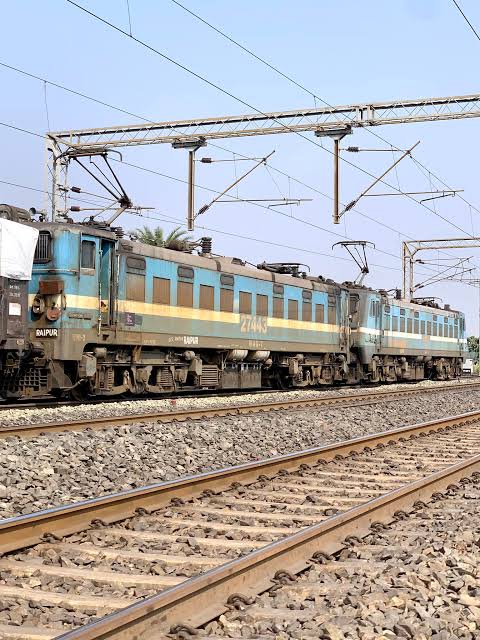
Patna, The Kiul-Gaya rail corridor, a vital artery linking southern Bihar with the eastern railway network, has become a case study in operational dysfunction, with passenger services routinely delayed by one to two hours despite the completion of a long-touted doubling project that was meant to deliver faster, more reliable connectivity.
Local commuters and long-distance travellers alike report that even short-haul MEMU and passenger trains – the workhorse services for students, office-goers and small traders – are now subject to systemic tardiness. On Saturday alone, the 05:00 Gaya-Jhajha MEMU (63316) departed 17 minutes late and arrived in Nawada more than an hour behind schedule. The 06:00 Gaya-Jamalpur Fast Passenger (53404) fared worse, reaching Nawada at 08:54 instead of 07:40 after unexplained halts of 42 minutes at Wazirganj and additional stops elsewhere. A third key service, the 07:20 Gaya-Kiul MEMU (63356), was similarly delayed by over an hour.
Passengers attribute the chaos to the continued prioritisation of freight and mail/express trains over local services, a practice that persists even after the track doubling was commissioned in phases over recent years. The infrastructure upgrade, billed by Indian Railways as a game-changer for speed and punctuality, appears to have delivered negligible improvement in day-to-day operations.
“Despite repeated complaints tagged to the Divisional Railway Manager (Danapur) and the General Manager (East Central Railway, Hajipur), nothing changes,” said Jitendra Kumar, a daily commuter who has documented the delays on social media for months. “In peak winter, waiting on open platforms for hours is punishing, and there is no reliable real-time information.”
The Kiul-Gaya line falls under the Danapur Division of East Central Railway and serves several million passengers annually across Nawada, Sheikhpura, Lakhisarai and Gaya districts. Industry observers note that while capital expenditure on doubling and electrification has been substantial, operational inefficiencies – including poor crew management, inadequate block clearance protocols and an apparent reluctance to penalise freight overruns – continue to undermine service quality.
With no visible corrective action from senior management and winter fog likely to compound delays in the coming weeks, commuter frustration is reaching breaking point. Travellers have called for a formal performance audit of the section and the introduction of enforceable punctuality targets, warning that persistent unreliability risks driving passengers to costlier road alternatives and eroding public confidence in one of Bihar’s most heavily used rail corridors.
Indian Railways has yet to respond publicly to the latest wave of complaints.