


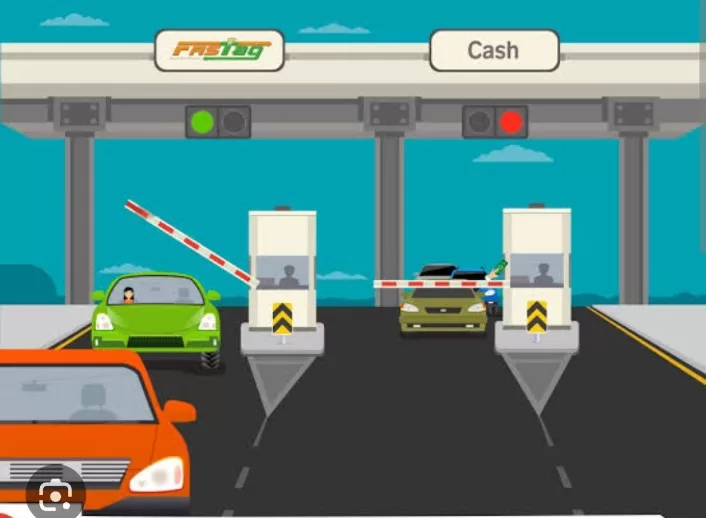
New Delhi, In a significant update shared with World Bank officials this week, India proudly announced a remarkable reduction in average waiting times at toll plazas, courtesy of the FASTag system. The waiting time has been slashed by a staggering 93%, now standing at a mere 47 seconds, compared to the previous 714 seconds. This achievement underscores the positive impact of FASTag, an electronic toll collection system, on India’s transportation efficiency.
Moreover, India highlighted another notable feat in the reduction of export release time at land ports. In 2022, the export release time plummeted to 22 hours, a remarkable improvement from the 101 hours recorded in 2021. These statistics showcase the government’s commitment to streamlining and enhancing logistics processes, fostering both economic growth and global competitiveness.
At the forefront of these developments is the Department for Promotion of Industry and Internal Trade, orchestrating strategic meetings and discussions with World Bank officials. The overarching goal is to propel India into the top 25 countries in the World Bank Logistics Performance Index (LPI), an ambition that aligns with the nation’s broader vision for infrastructural advancement.
During the meeting, the government unveiled ambitious plans for the future, aiming to add an additional 30,000 km of railway tracks by FY31. The port capacity is set to surge to 2,200 million tonnes per annum (mtpa) by 2030, up from 1,617 mtpa in the preceding year. Furthermore, an expansive vision involves expanding the national highways network to an impressive 185,000 km by 2030, with a substantial portion comprising four-lane and above highways.
Sumita Dawra, the Special Secretary (Logistics) at DPIIT, expressed, “We have showcased initiatives in logistics and infra sectors to the World Bank team, and also next-gen reforms in areas such as rail, road, multimodal shifts, EXIM, customs, green logistics.” This underlines the comprehensive approach that India is adopting to modernize its logistics and transportation infrastructure.
India’s ascent in the World Bank Logistics Performance Index 2023, improving its ranking by six places to 38 out of 139 countries, further emphasizes the tangible outcomes of these strategic initiatives. The railway ministry’s long-term vision to lay 80,000 km of additional rail tracks and increase rail containerization to 35% by 2031 reflects a commitment to sustained infrastructural growth.
As the nation continues on this transformative journey, integrating initiatives such as integrated logistics parks, digitized systems for freight data analytics, and simplified processes, it aims to set new benchmarks in global logistics performance. The upcoming implementation of a land port management system and the development of new land ports underscore India’s dedication to modernizing its logistics landscape.
In a broader context, these initiatives align with India’s vision of becoming a logistics and infrastructural powerhouse, contributing significantly to its economic prowess on the global stage.