


Ottawa – In a significant development aimed at de-escalating diplomatic tensions, India’s embassy in Ottawa has declared its intention to reopen visa services for Canadian citizens. This action comes amid a contentious dispute over the murder of Hardeep Singh Nijjar, a prominent Sikh separatist, on Canadian soil.
The rift between India and Canada deepened when Canadian Prime Minister Justin Trudeau publicly asserted a link between Indian intelligence agencies and the assassination of Canadian national Hardeep Singh Nijjar. These allegations were promptly dismissed as “absurd” by the Indian government.
Hardeep Singh Nijjar, a proponent of an independent Sikh state separate from India, was sought by Indian authorities for alleged involvement in terrorism and conspiracy to commit murder.
Canada has persistently called for India’s cooperation in the investigation into Nijjar’s tragic demise, even expelling an Indian diplomat in connection with the affair.
In retaliation, India responded by suspending visa services for Canadian citizens. The Indian High Commission, after a meticulous review of the security situation and taking into account recent Canadian measures, has now decided to reinstate visa services, signifying a possible thaw in relations.
Canada, in response to the crisis, recently withdrew 41 diplomats from India. Meanwhile, New Delhi was on the verge of revoking diplomatic immunity for all but 21 of Canada’s diplomats and their families, compelling Ottawa to recall the remaining diplomatic personnel.
The Indian government also cautioned its citizens against traveling to certain regions of Canada due to an upsurge in anti-Indian activities.
Hardeep Singh Nijjar, who emigrated to Canada in 1997 and subsequently became a Canadian citizen in 2015, met a tragic end, being gunned down by two masked assailants in the parking lot of a Sikh temple near Vancouver in June.
Canada, home to approximately 770,000 Sikhs, constituting about 2% of the nation’s population, harbors a vocal faction advocating for the creation of a distinct state named Khalistan. The Sikh separatist movement has largely waned in India, where security forces employed deadly measures to quell an insurgency in the state of Punjab during the 1980s.
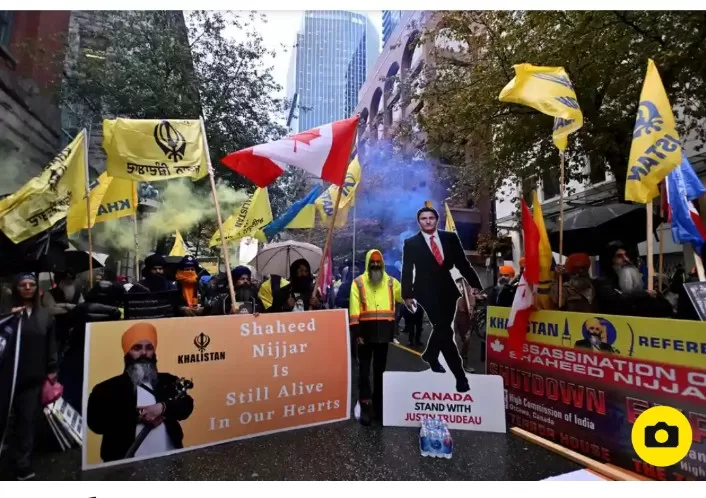
Last month, hundreds of Sikh protesters gathered outside Indian diplomatic missions in Canada, engaging in flag-burning and the defacement of images of Indian Prime Minister Narendra Modi.
This development signifies a pivotal moment in the ongoing diplomatic saga between India and Canada, as both nations seek to navigate the complexities surrounding the tragic murder of Hardeep Singh Nijjar and the subsequent diplomatic fallout.